

Composites & Plastics Dust Extraction
Extraction and filtration for dust from composite, fibreglass and plastics work.
Applications
- Composite sanding
- Fibreglass machining
- Plastics processing
Composite Dust Filtration
Cutting, sanding, trimming and finishing composites produce fine dust. Carbon fibre dust conducts electricity, so deposits on electronics need particular attention. We also check the glass-fibre and resin content when choosing filters.
We install low- or high-vacuum systems to collect dust at manual workstations and automated lines. We choose filter material, airflow and ductwork to suit the material being worked.
Process, Contaminant And Extraction Approach
| Process | Contaminant / Need | Approach |
|---|---|---|
| Hand sanding | Fine GRP / glass-fibre dust | On-tool high vacuum |
| Large-part processing | Dust across a wide area | Extracted table or work-area capture |
| Carbon-fibre cutting | Fine conductive dust | Sealing and electrical bonding checks |
| Resin and plastic processes | Dust, gases or vapours | Separate ventilation assessment for the contaminant |
From Sanding Tools To Central Filtration
- On-tool extraction: E-PAK and FlexPAK high-vacuum systems connected directly to pneumatic or electric sanders.
- Extracted benches and walls: downdraft tables for smaller parts and suitable extraction walls for large surfaces.
- Central systems: multiple extraction points connected to a shared filter station with planned maintenance and discharge.

Managing Conductive And Combustible Dust
We review dust combustibility and working risks to select antistatic filters, grounding and any required explosion venting and isolation equipment. ATEX suitability is assessed for the whole system and its operating conditions.
During production, we monitor the filters, extraction points and dust discharge system together. Regular maintenance helps keep the system working effectively.
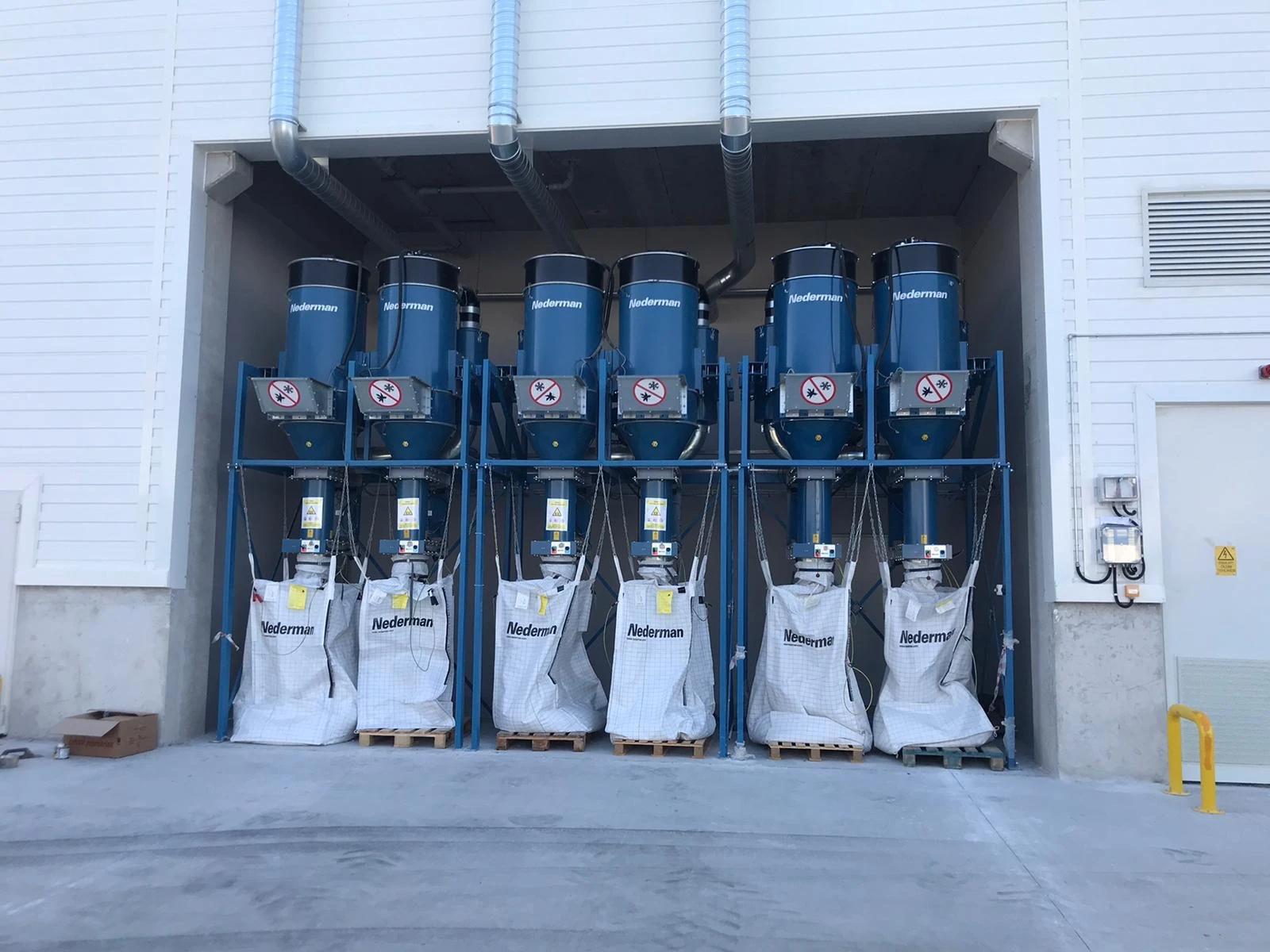
Plastics Processing Applications
Control of dust, gases and vapours from plastics processing is assessed according to the polymer, additives and process temperature. Dust filters do not replace gas treatment; extraction and treatment are specified for the actual emissions.
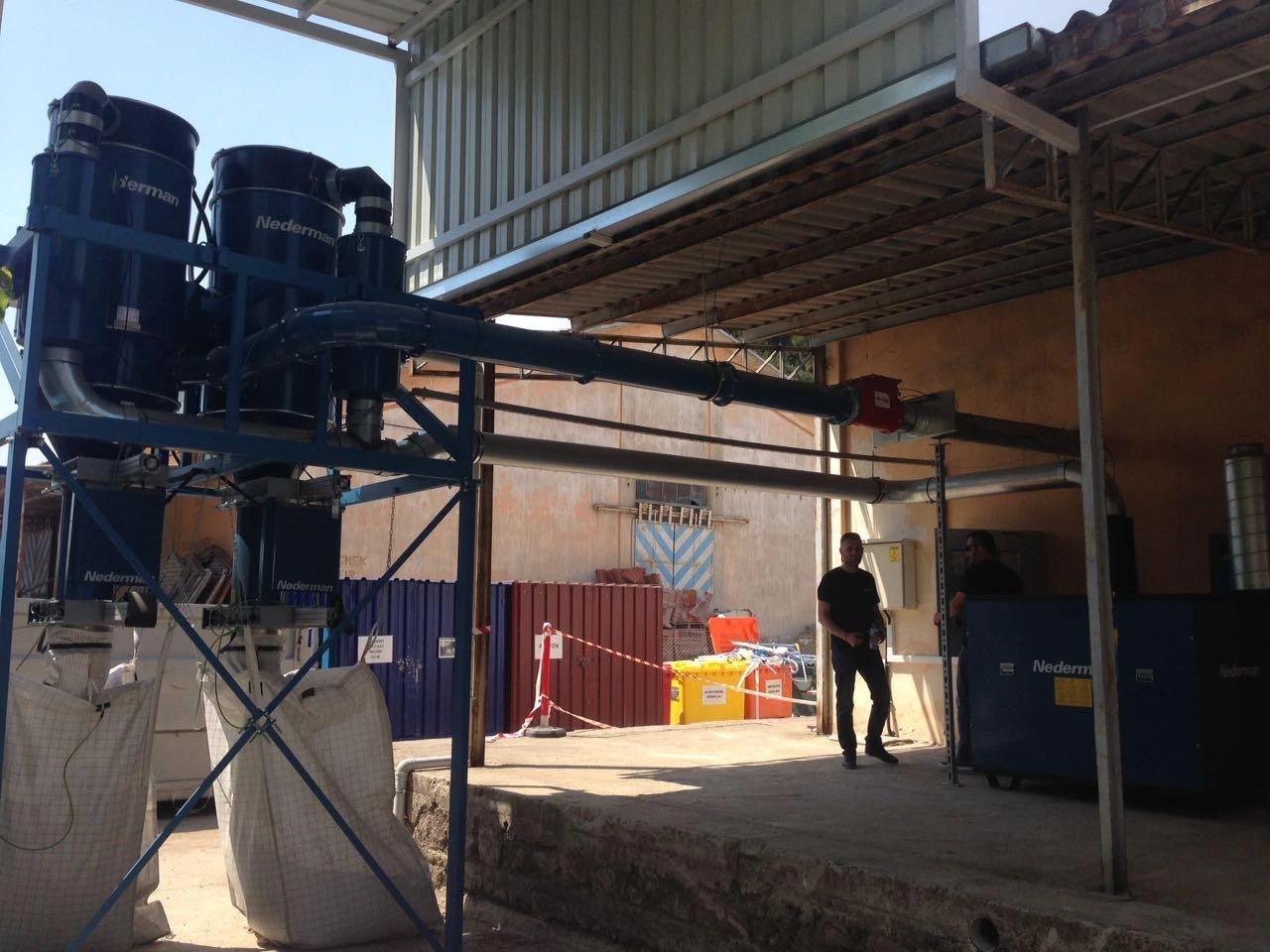
GRP, Carbon Fibre And Plastics Produce Different Contaminants
Carbon-fibre dust is conductive and can contribute to faults if it enters electrical cabinets. Resin and dust properties inform media selection and combustibility assessment. Styrene vapour from GRP lamination and gases from heated plastic are not removed by a particle filter; assess their capture and treatment separately.
Start With The Composition Of The Workpiece
The name of a composite part alone does not fully describe its dust. Fibre type, resin, fillers and the operation all matter. Particles from cutting and fine dust from final surface sanding may behave differently during collection. An enquiry should therefore explain the operation performed on the part, rather than only naming the material.
For plastics, the polymer and processing temperature are also relevant. Dust from mechanical work and gases or vapours associated with heating require separate assessment. Material information, a process description and photographs support the initial review. A particulate filter should not be presented as solving gas or odour problems that have not been separately assessed.
Access Around Large Parts And Hand Tools
Working on several surfaces of a large composite part may require the extraction point to move with the task. With on-tool extraction, the connection needs to match the sanding or cutting tool. Heavy or awkward hoses can make continuous use difficult. Collection performance and working ergonomics should therefore be considered together.
The choice of bench, extraction table or enclosure depends on the part dimensions and surfaces that need access. A layout that works on one face may perform differently after the part is turned. Photographs of the work stages and available space help identify suitable capture positions. The effect of nearby activities on airflow is also considered during layout planning.
Collecting Dust From Different Operations
A workshop may carry out composite cutting, metal finishing and surface preparation in the same area. Connecting these operations to one extraction line should follow an assessment of the materials involved. Conductive dust, work that produces sparks and different resin systems can affect selection. Deciding between shared and separate extraction is part of the project review.
Ducts, connections, collection vessels and cleaning arrangements matter alongside the filter media. A single equipment feature does not establish suitability for the entire application. Selection follows the facility's material and risk assessment. The scope of any specialist equipment or protective measures is established after the application information has been reviewed.
Plan Surface Cleaning And Filter Maintenance Together
Even with extraction running, dust may accumulate on parts, benches or in difficult-to-reach areas. Cleaning arrangements should include these locations. Consider collection methods suited to the material rather than practices that disperse settled dust back into the air. Cleaning equipment needs to match the dust properties and the site's operating procedures.
Before filter maintenance, establish how collected material will be emptied and transported in closed containers. Service enquiries benefit from details of the materials, tools, daily use and observed problem. A change of resin or production operation is also a reason to review the existing extraction arrangement, rather than assume equipment selected for the previous process remains suitable.
Solutions For This Industry
Composite And GRP Dust Collection
Material and resin, process, part dimensions and workstations. Local capture and central filtration are planned around these inputs.
On-Tool Extraction And Plant Cleaning
Extraction at the workstation or enclosed collection of deposited dust using material-compatible equipment.
Related Products
Product catalogue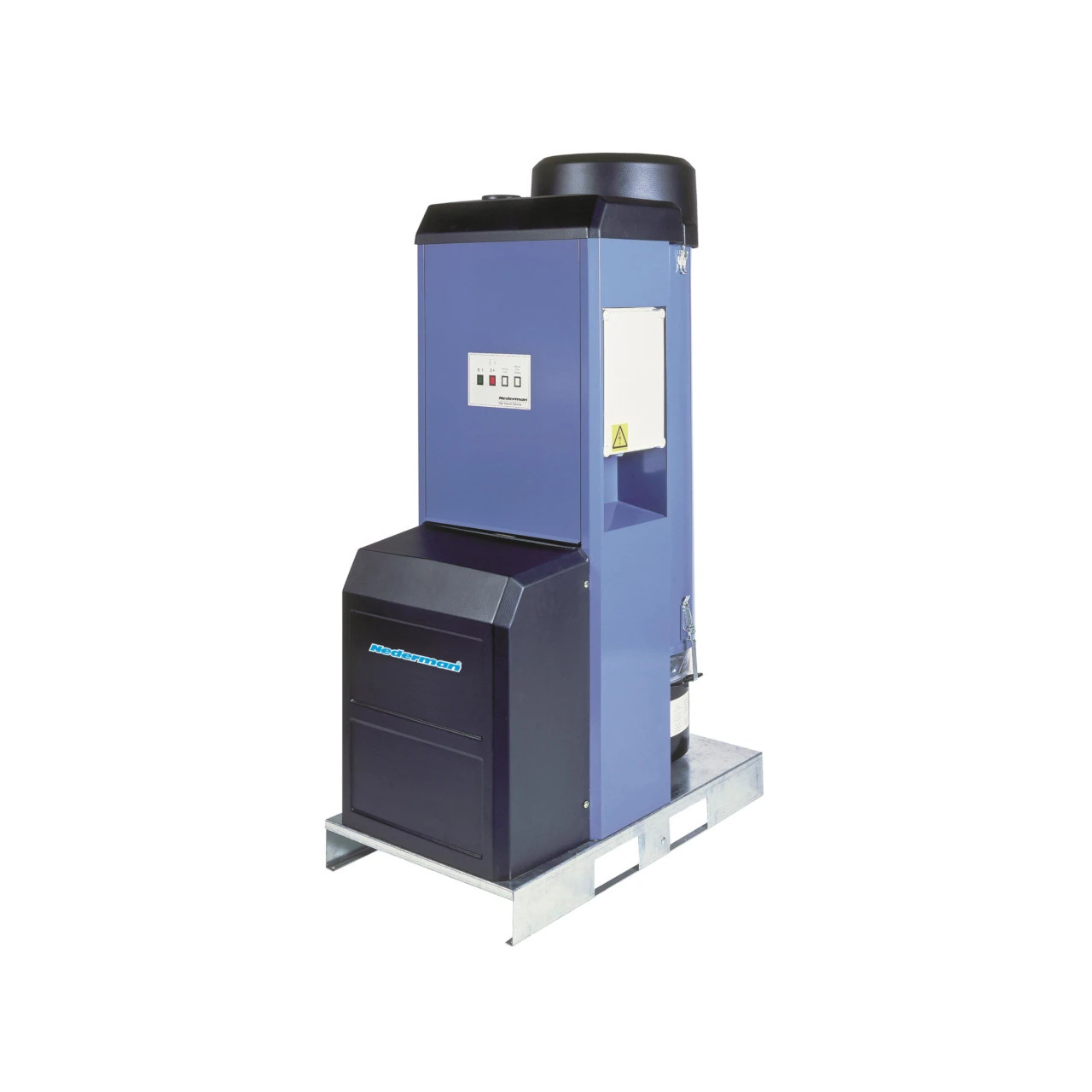
Frequently Asked Questions
Can Hand Sanders Connect To Extraction?
Match a compatible tool’s airflow and vacuum requirement to the hose and extraction-unit capacity.
Will A Dust Filter Remove GRP Odour?
Gases and vapours are not captured by particulate media. Review separate ventilation for the resin and chemicals.
Is Antistatic Media Enough For Carbon Fibre?
No. Capture, sealing, electrical bonding and risk assessment must be considered together.
What Information Is Needed For A Quote?
Material and resin, process, part dimensions and workstations.
Related Articles
Let’s Choose A System For Your Business
Let’s discuss what you need. Share your contact details and we can plan a suitable system for your facility.
+90 212 909 52 83