
Oil Mist Filtration Systems
Filtration systems that capture oil mist at CNC machines. From individual machines to central production lines: system selection, engineering, installation and maintenance.

How Does Oil Mist Filtration Work?
Pre-Filter
Separates larger droplets and coarse particles carried by the process, helping to reduce the load on the main filter.
Coalescing Main Filter
Small oil droplets combine on the filter fibres. In media designed for drainage, the collected liquid drains down through the filter.
Final HEPA Stage
Used for remaining fine particles when the application requires it. Filter class and compatibility are selected against the equipment specifications.
Drainage And Liquid Removal
Collected liquid is directed to a suitable container. Reuse in the process requires checks on cleanliness, compatibility and manufacturer requirements.
One Machine Or A Central System?
Machine count alone does not determine the choice. We assess the fluid, enclosure dimensions, operating hours and maintenance access together.

Machine-Mounted Filtration
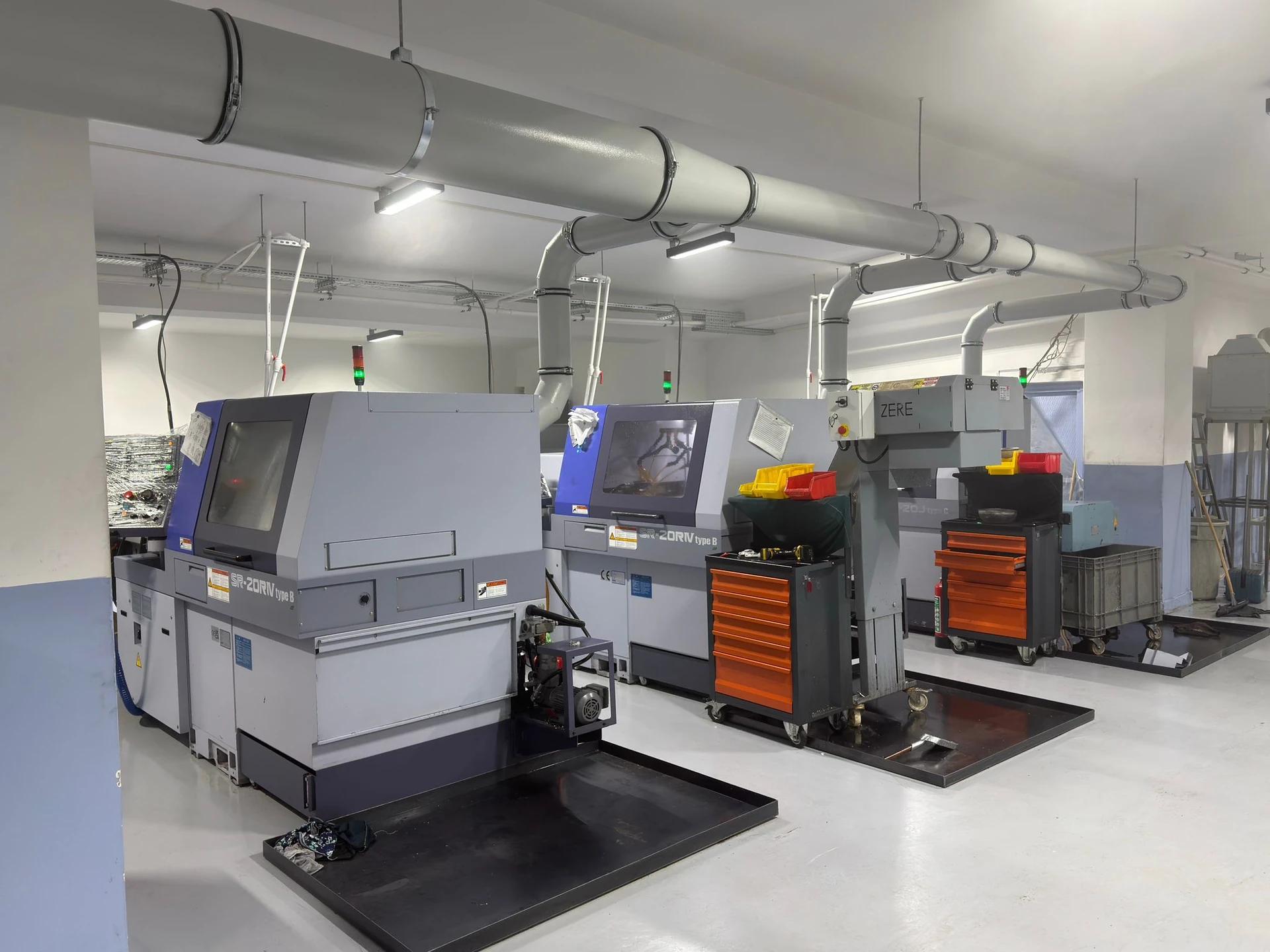
The filter unit is installed on or close to the machine. Short extraction connections and independent operation can suit separate production stations. Mounting loads, vibration, drainage and access for filter replacement are checked before installation.
Central Oil Mist Extraction
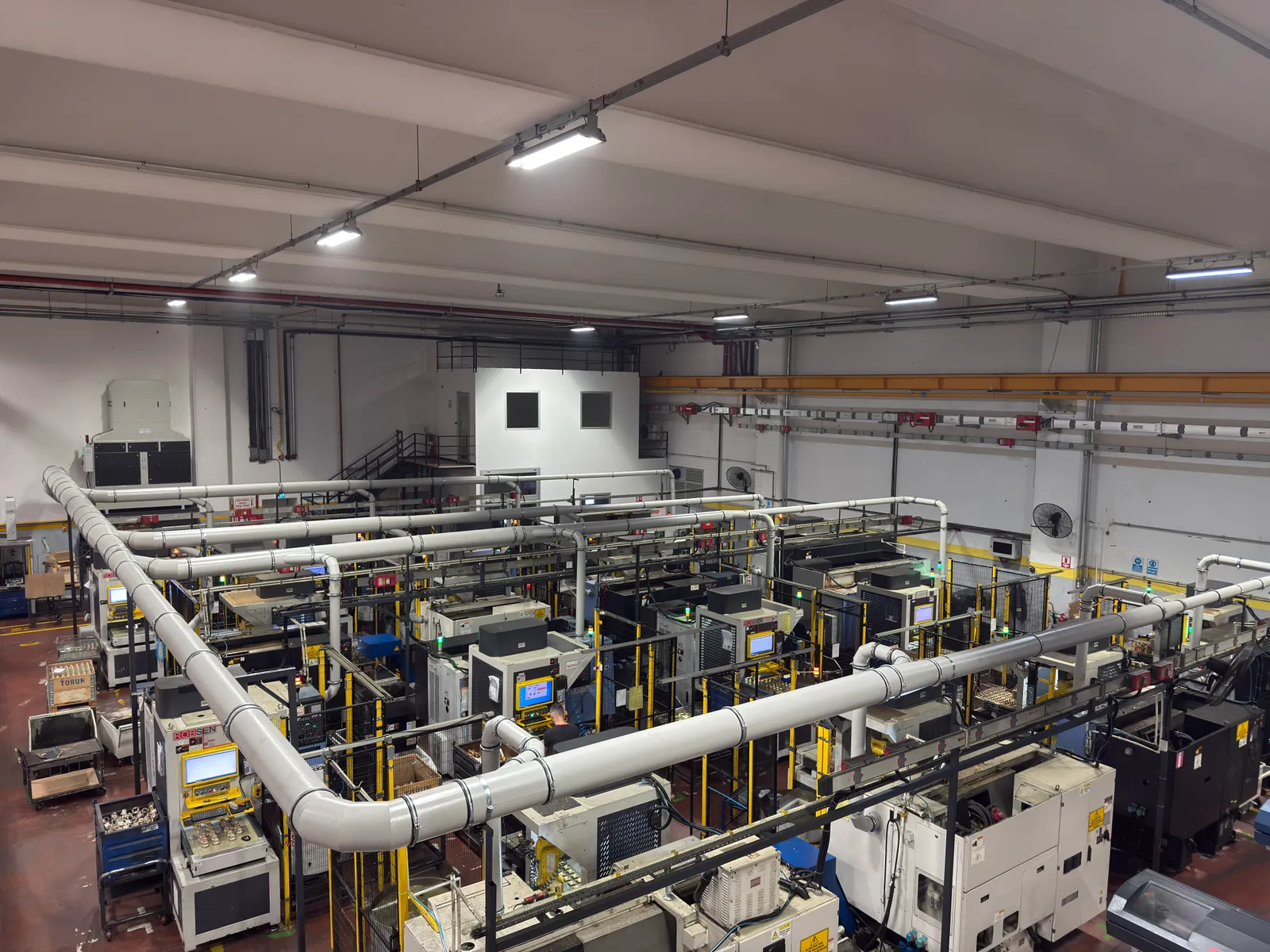
Several machines connect to a filter system through shared ductwork. Simultaneous operation, duct losses and total mist loading are assessed together. The design also considers changes in production and how the line will operate during maintenance.
Designing Central Oil Mist Extraction
An effective system needs properly designed extraction ductwork as well as a suitable filter. During a site survey, we review machine layout, fluid type and operating patterns to establish the airflow requirement.
- Airflow For Each Machine
- Enclosure openings, the process and mist generation are assessed. A single airflow value is not assumed to suit every machine.
- Duct Routing And Drainage
- Connection sizes, pressure losses, sealing and drainage arrangements are planned together to manage collected liquid.
- Simultaneous Use And Controls
- Dampers and a variable-speed fan are considered where suitable for production. Settings are checked during commissioning.
- Air Discharge And Service Access
- The discharge arrangement is determined by the process and occupational hygiene assessment. Access is provided for filter replacement and duct cleaning.
Mechanical And Electrostatic Filtration
The two technologies separate oil mist in different ways. The solution presented here by BMT Teknik uses staged mechanical filtration. Selection should consider the fluid, operating load and maintenance arrangements alongside the initial investment.
| Feature | Mechanical filtration | Electrostatic filtration |
|---|---|---|
| Separation method | Droplets are captured by filter media and separated as liquid in stages designed for drainage. | Electrically charged particles and droplets are captured on collecting surfaces. |
| Maintenance | Pressure drop, extraction performance and manufacturer instructions guide stage-specific cleaning or replacement. | Collecting cells require regular cleaning and electrical components need inspection. |
| Selection factors | Filter media, liquid loading, drainage and the required final stage. | Process suitability, cell-cleaning arrangements and the manufacturer’s application requirements. |
Where Is Oil Mist Filtration Used?
CNC Turning And Milling
Source extraction for mist generated inside enclosed machines using emulsions or cutting fluids.
Wet Grinding
Applications requiring assessment of fine particles carried along with liquid droplets.
Pressing And Sheet Forming
Extraction and collection arrangements suited to lubricant mist around the work area.
Industrial Parts Washing
Mist collection assessed against the washing fluid’s properties and operating temperature.
Oil Mist Filter Units
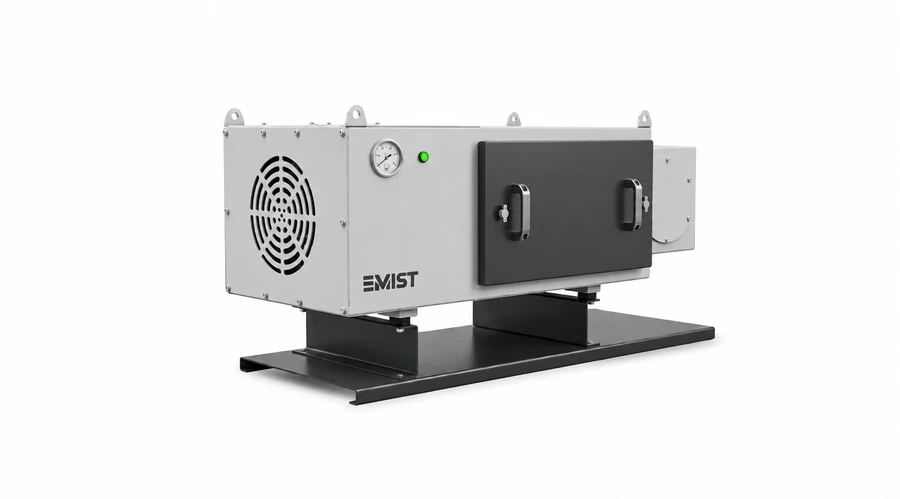
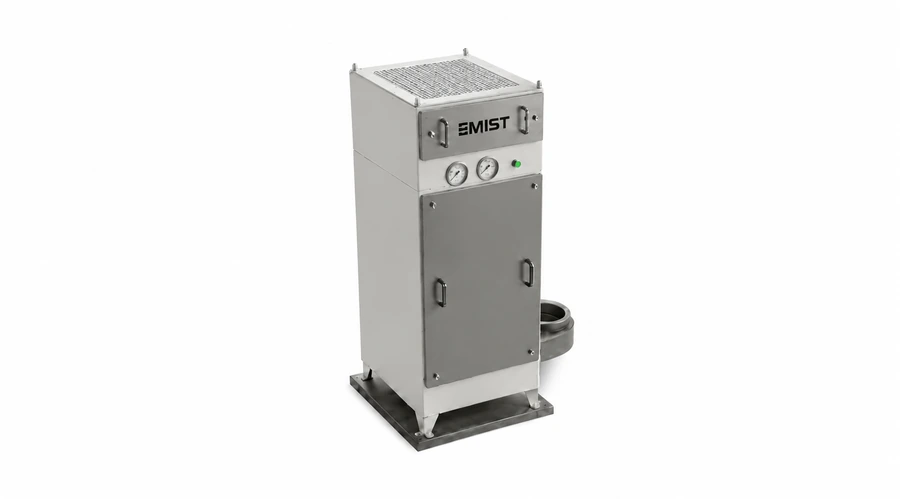
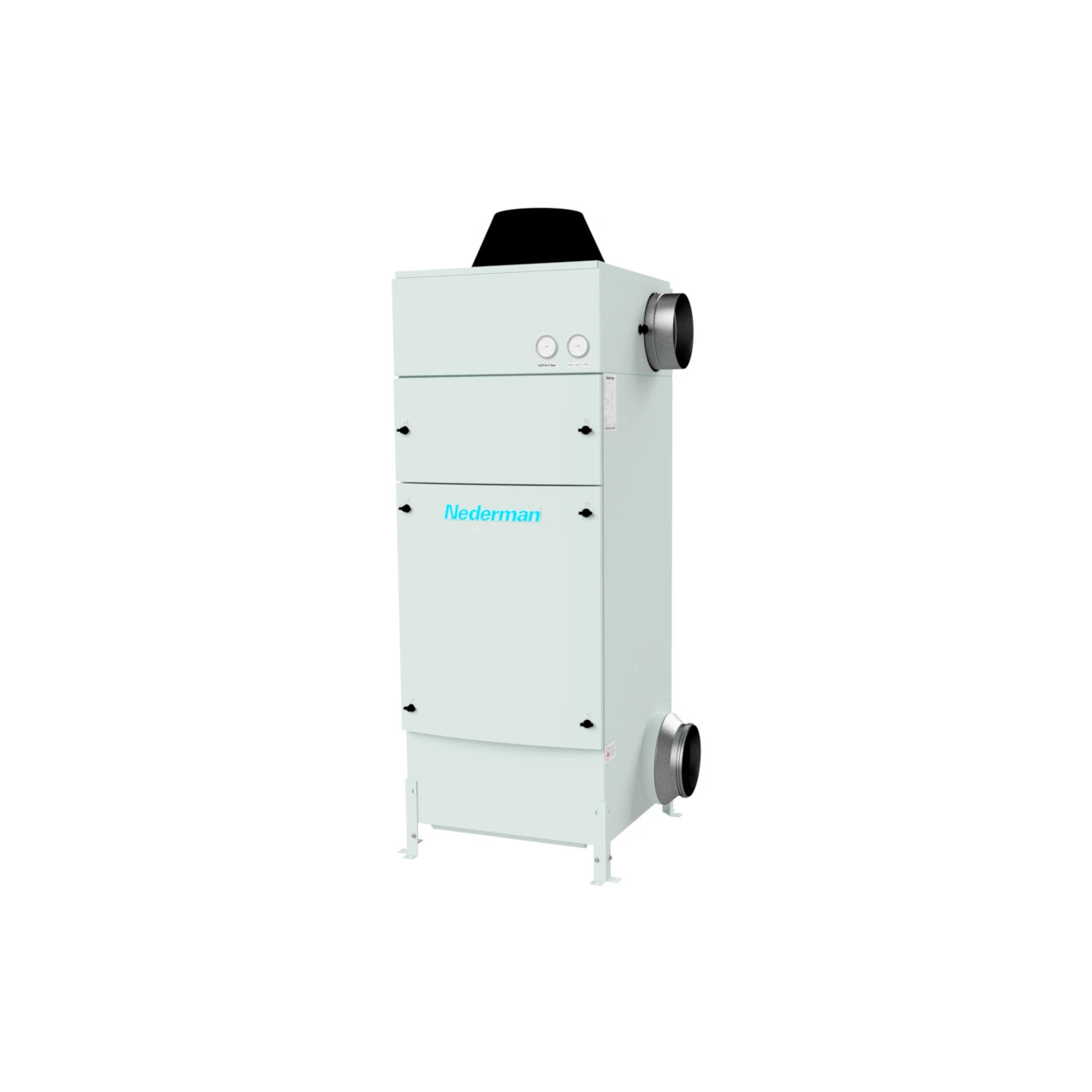
Compare capacity and installation options using each product’s technical specifications.
Frequently Asked Questions
What Is The Difference Between Oil Mist And Oil Smoke?
Oil mist consists of small liquid droplets produced during machining. Oil smoke can form when oil evaporates at a hot surface and then condenses into finer particles. The oil and process determine the required filter stages.
Can Filtered Air Be Returned To The Workshop?
A HEPA filter alone does not establish whether air can be recirculated. Process contaminants, system suitability, air quality and occupational hygiene conditions must be assessed together. Required measurements and application conditions determine the discharge arrangement.
How Is Filter Replacement Timing Determined?
The pressure gauge, extraction performance and manufacturer’s maintenance instructions are considered together. Final pressure limits and cleanable stages vary by model, so a single pressure limit or fixed replacement interval is not used for every unit.
What Should I Do If Extraction Has Become Weaker?
Filter loading, duct leaks, drainage, damper settings and fan condition should be checked. The issue may extend beyond the filter. Share the equipment model, serial number and observed symptoms when requesting service.
What Information Is Needed For A Quotation?
Machine numbers and models, oil or coolant type, operating hours, layout and a few site photos help with the initial assessment. If you are upgrading an existing system, equipment and filter nameplates are also useful.
Oil Mist Guides
Knowledge centre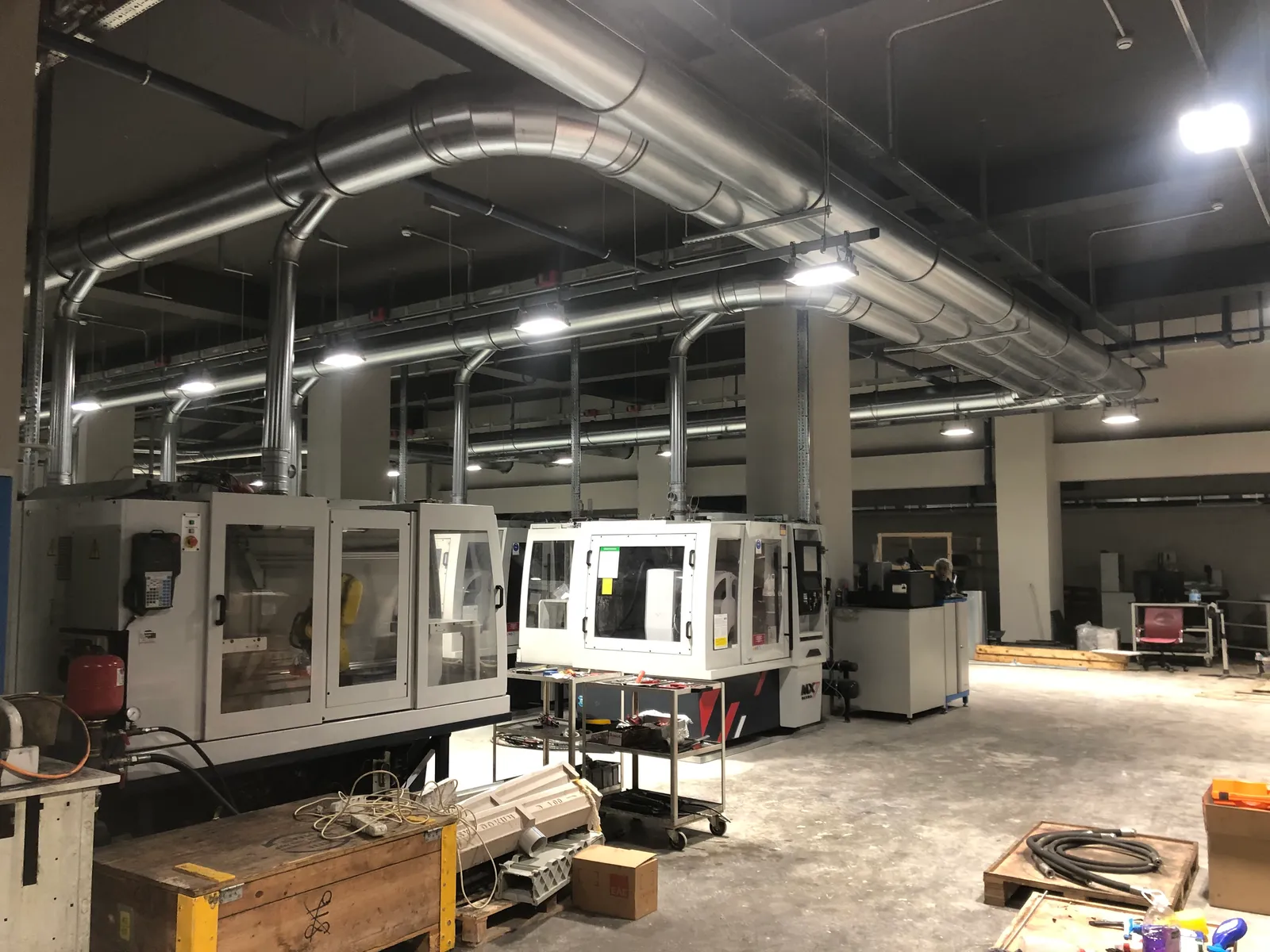 OIL MIST AND OIL SMOKE
What Causes Oil Mist And How Can It Be Controlled?
CNC oil mist and oil smoke: causes, extraction at source and what to consider when selecting an oil mist collector for metalworking.
 OIL MIST AND OIL SMOKE
Oil Mist Measurements And Workplace Safety
What do oil mist measurements mean? Points to consider when planning measurements, extraction and maintenance.
Let’s Select A System For Your Production.
Tell us about your machines, fluid and layout. We can assess your oil mist extraction requirements together.