
Oil Smoke Filtration Systems
Source extraction for smoke from machines using neat cutting oil and processes involving hot oil. Filter stages, airflow and drainage are planned around your production conditions.
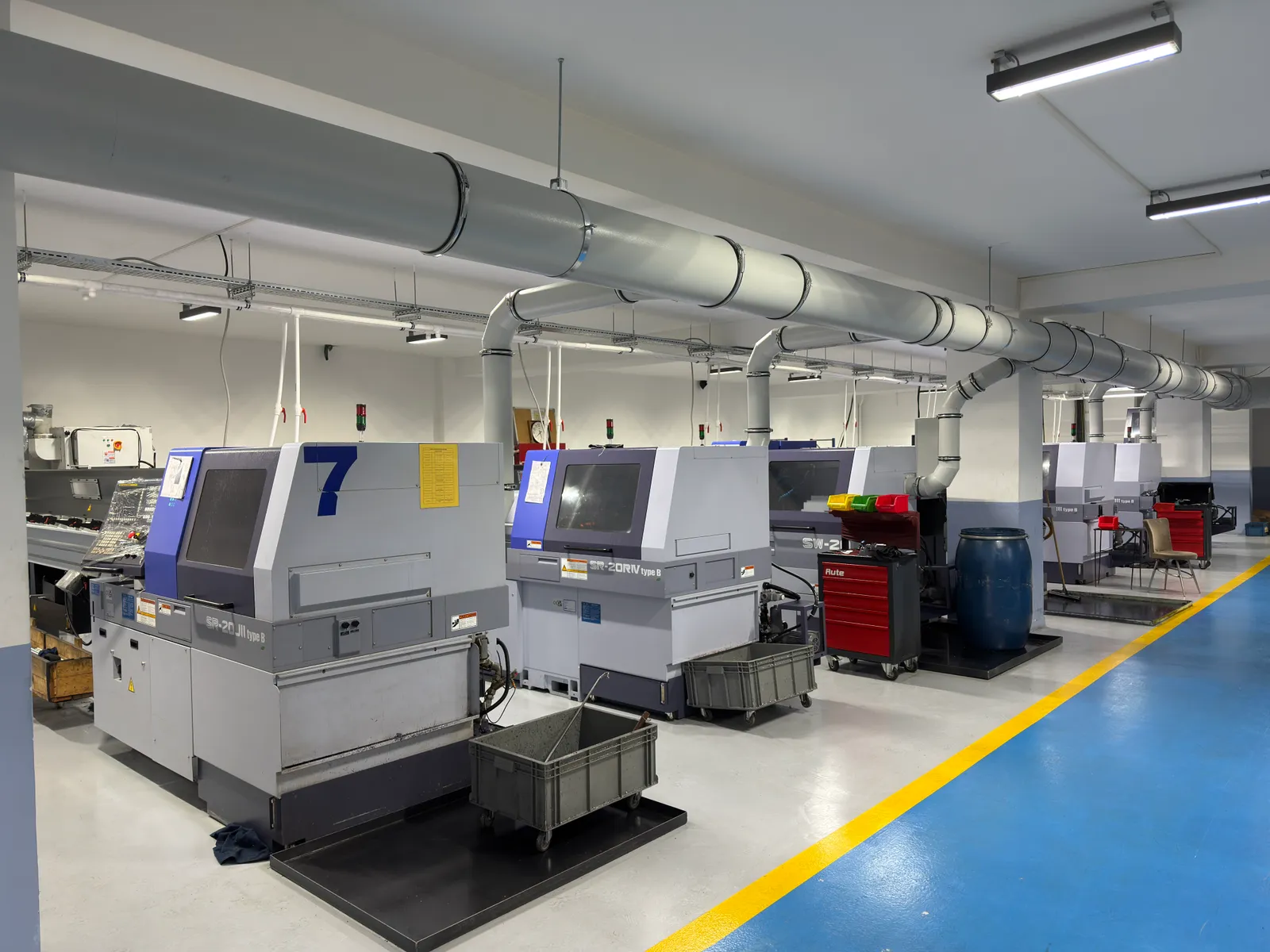
How Is Oil Smoke Filtered?
Capture At Source
Smoke is captured from the machine enclosure or a suitable hood. Openings and temperature help determine the extraction requirement.
Pre-Separation
An appropriate preliminary stage separates larger droplets and entrained particles, reducing the load on subsequent filters.
Fine-Droplet Filtration
Coalescing filter layers capture fine droplets. The final filter stage is selected for the oil and the smoke produced.
Liquid Drainage
Separated oil is collected through sealed drainage. The process assessment determines the air discharge arrangement.
Installation For The Machine And Production Line
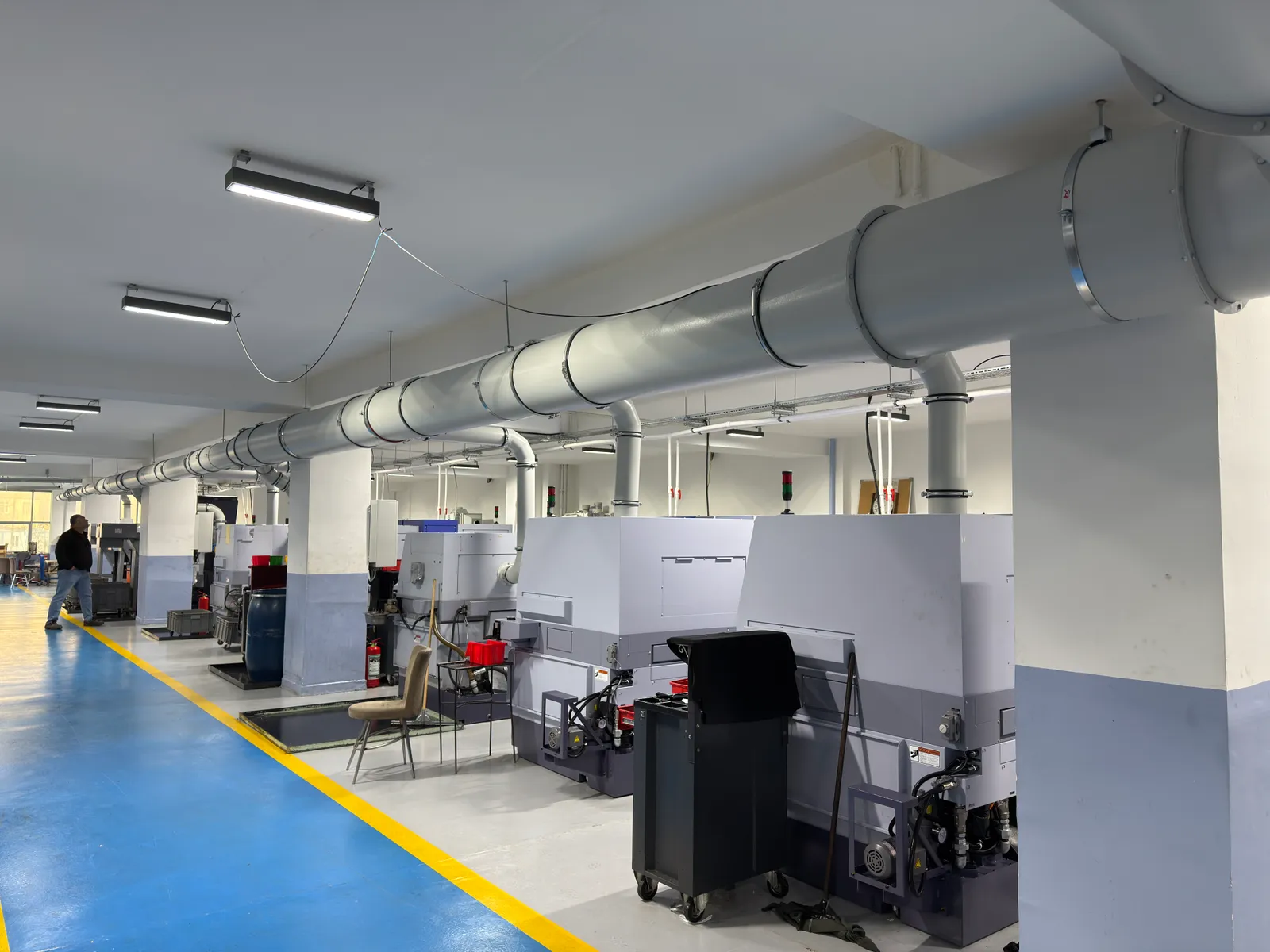
Single-Machine Extraction
A short duct connection can suit independently operated machines. Mounting space, service access, oil loading and continuous-operation requirements are checked together.
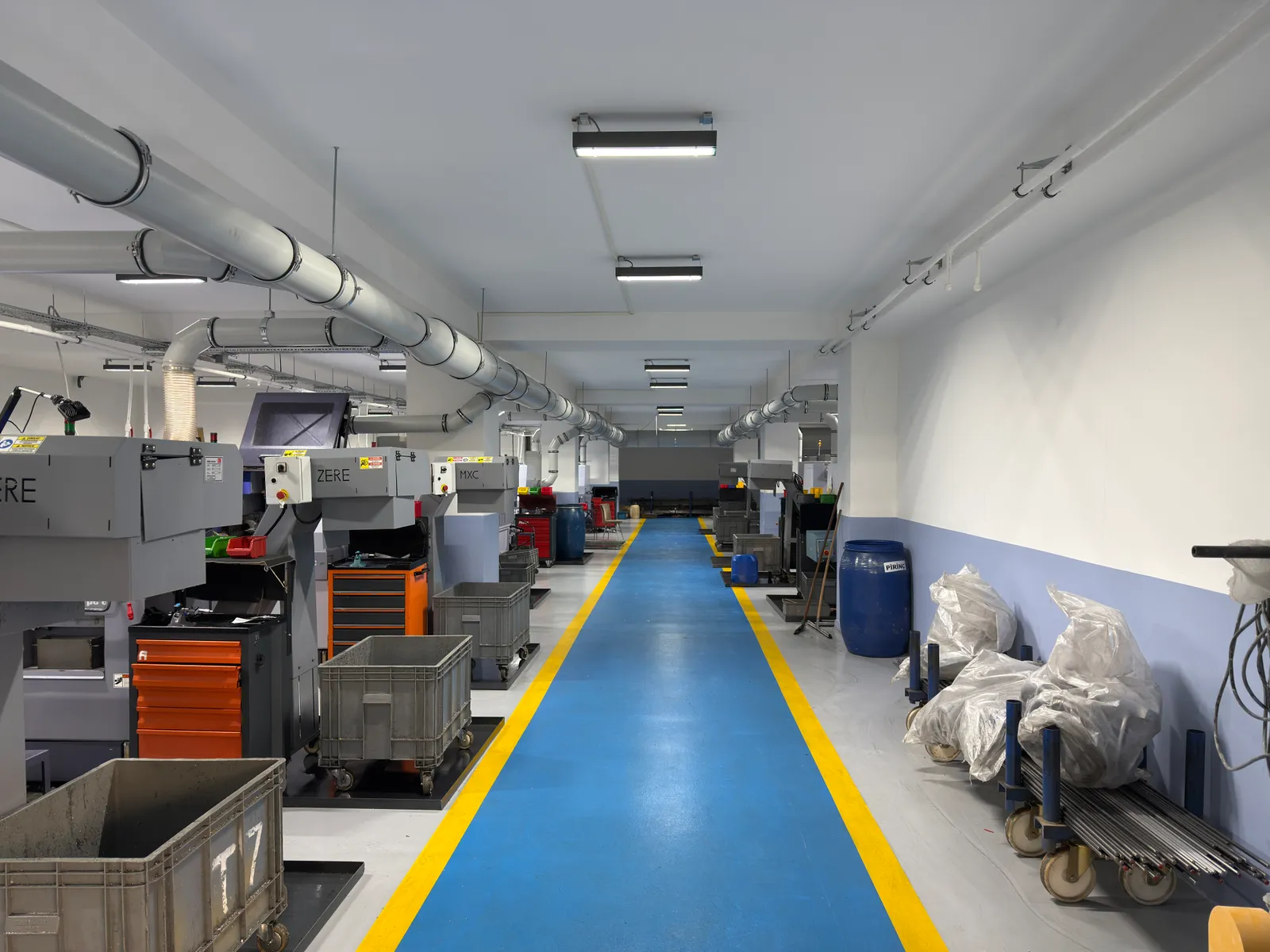
Central Oil Smoke Collection
Multiple machines can connect to a shared system. The design accounts for simultaneous use, duct losses and drainage arrangements that manage liquid accumulation.
Understanding The Process Before Choosing A Filter
Oil smoke can form when oil evaporates at a hot surface and then condenses. It may contain finer droplets than mechanically generated oil mist, so the same filter selection does not suit every application.
- Oil And Operating Temperature
- Oil specifications, machining method and inlet-air temperature are reviewed. Any pre-treatment needed for hot processes is assessed separately.
- Ductwork And Liquid Management
- Connection sizes, pressure losses, oil accumulation and cleaning access are considered together.
- Operation And Fire Risk
- Where sparks or hot particles may be carried into the system, separation measures, controls and suitable equipment are planned for the process.
Applications
Sliding-Head Lathes
Source collection inside enclosed CNC machines using neat cutting oil.
Gear Cutting And Deep-Hole Drilling
Individual or central extraction selected for oil loading and operating cycles.
Oil-Based Grinding
Combined assessment of fine particles and oil droplets.
Heat Treatment And Hot Forming
Application-specific assessment of temperature, oil properties and contaminants.
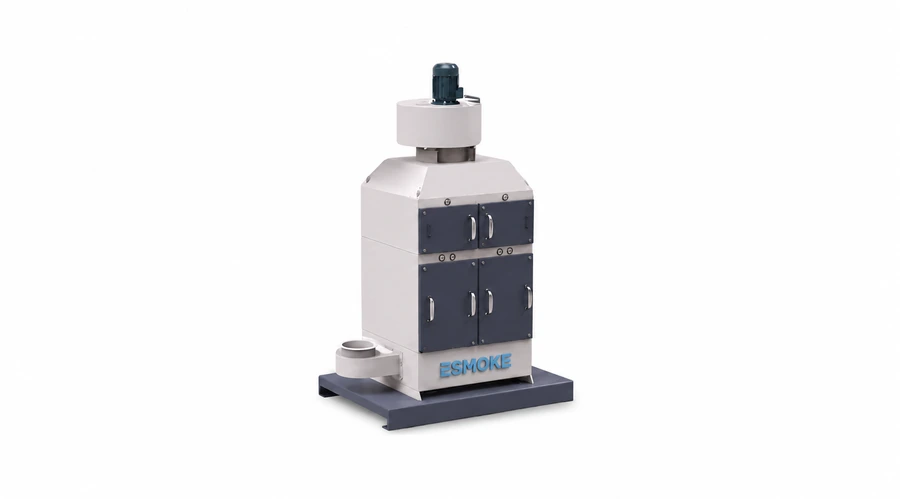
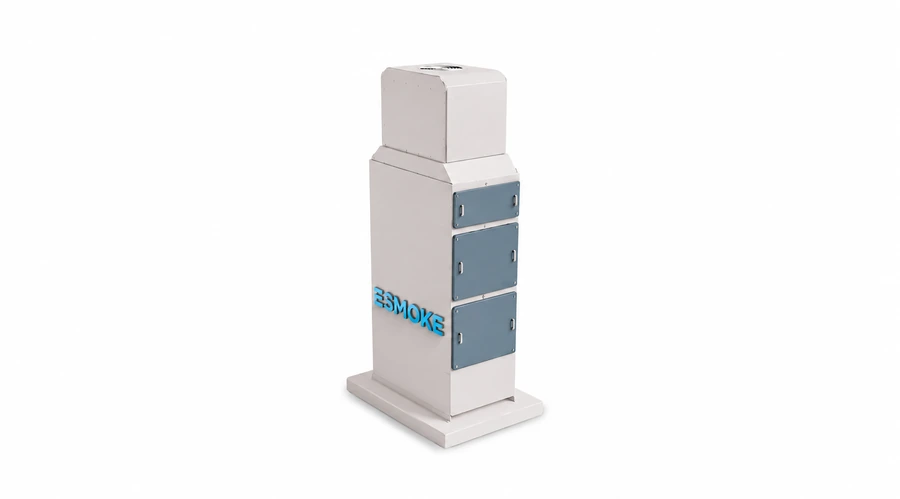
Oil Smoke Filter Units
All models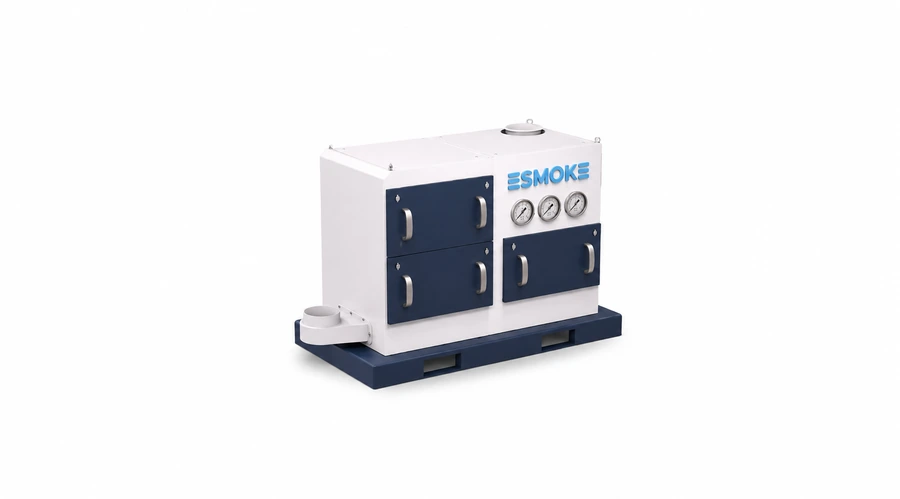
Frequently Asked Questions
Can An Oil Mist Filter Be Used For Oil Smoke?
Airflow alone is not enough to decide. Oil type, droplet characteristics, temperature and manufacturer application conditions are checked. ESMOKE models are assessed for oil smoke using this information.
Is A HEPA Filter Sufficient For Air Recirculation?
Not on its own. HEPA captures particles; gases and other contaminants require separate assessment. Occupational hygiene assessment and relevant measurements determine the discharge arrangement.
When Should Filters Be Replaced?
Pressure drop, extraction performance and model-specific instructions are monitored. Oil loading and operating hours vary, so there is no fixed replacement interval for every site.
What Should I Share For A Quotation?
Machine count, oil type, operating hours, enclosure dimensions and a layout provide a useful starting point.
Related Guides
Knowledge centre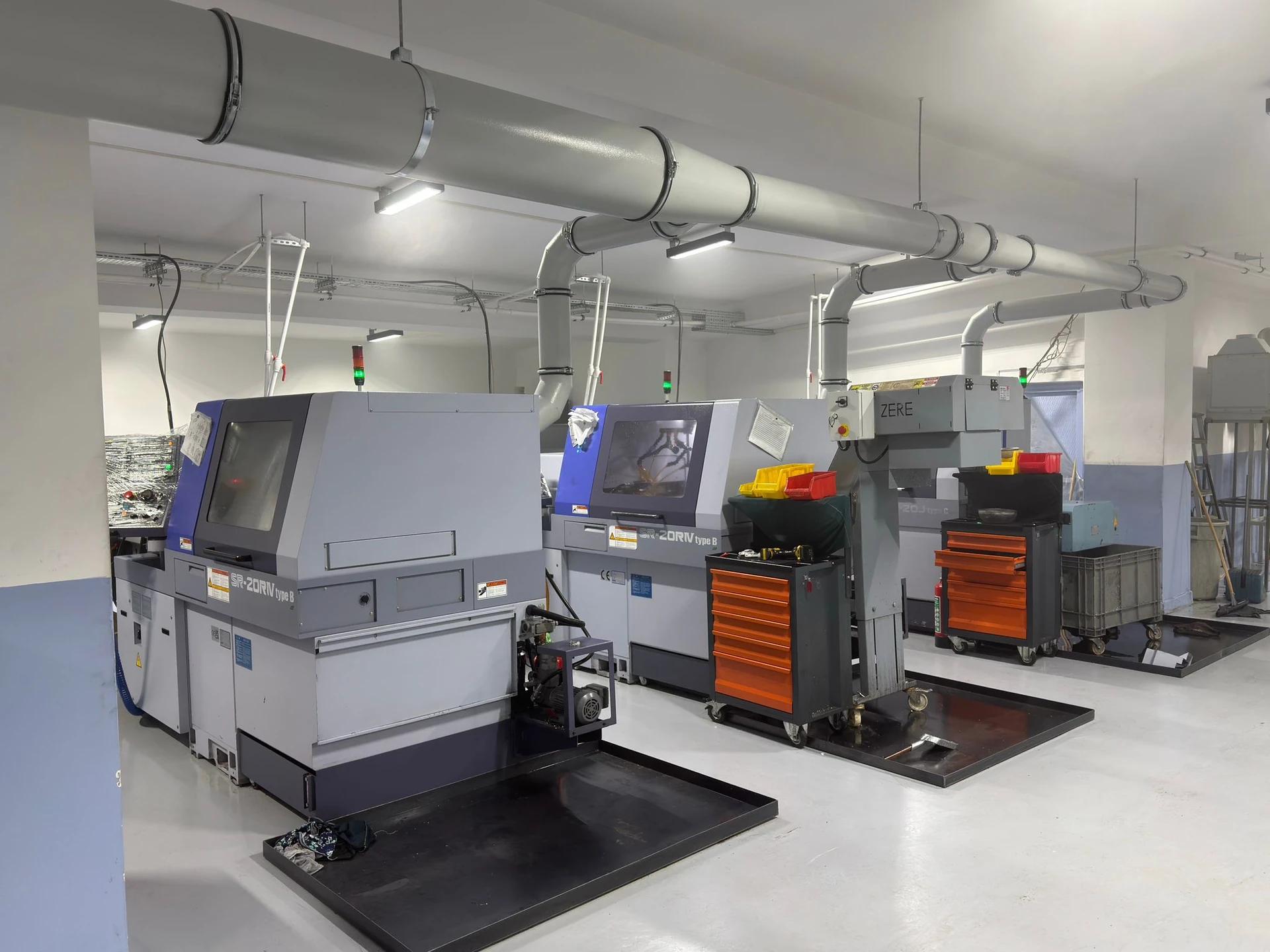 OIL MIST AND OIL SMOKE
Oil Mist Measurements And Workplace Safety
What do oil mist measurements mean? Points to consider when planning measurements, extraction and maintenance.
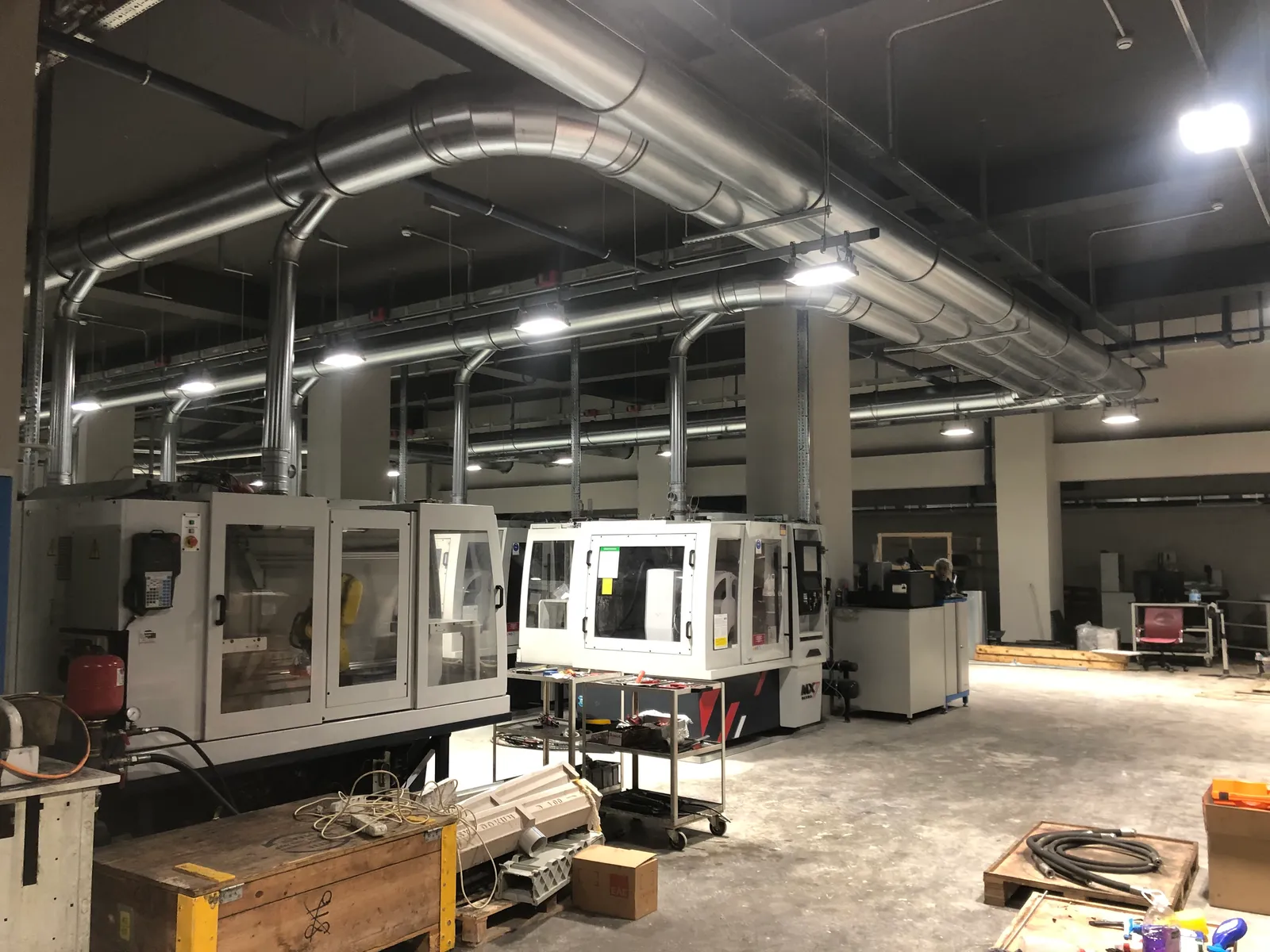 OIL MIST AND OIL SMOKE
What Causes Oil Mist And How Can It Be Controlled?
CNC oil mist and oil smoke: causes, extraction at source and what to consider when selecting an oil mist collector for metalworking.
Let’s Select A System For Your Production.
Share your machines, oil and operating pattern. We can assess a suitable extraction and filtration system together.