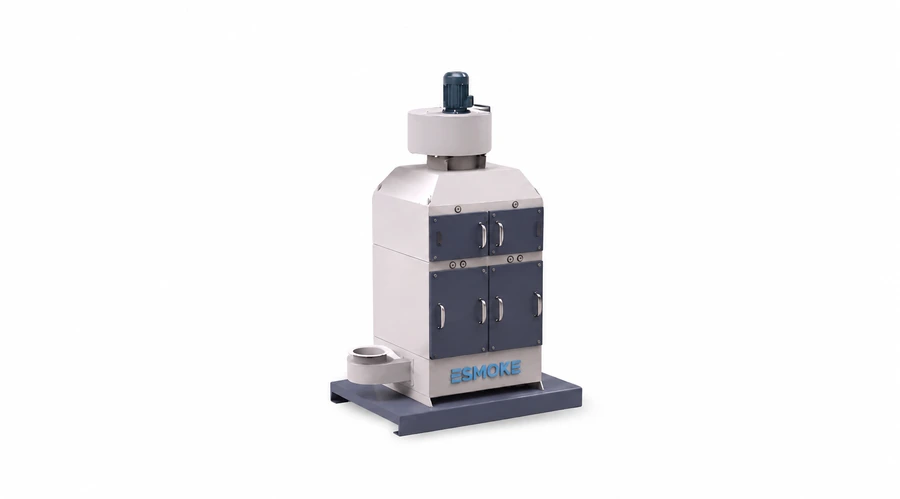
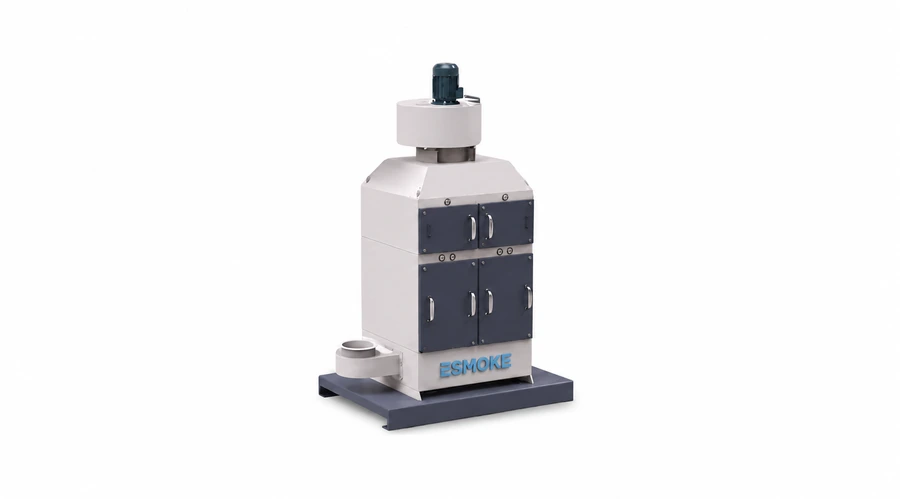
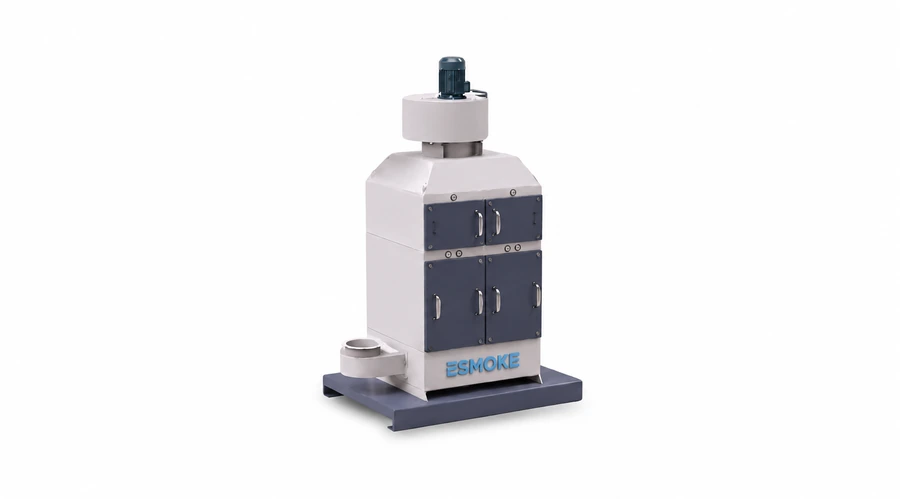
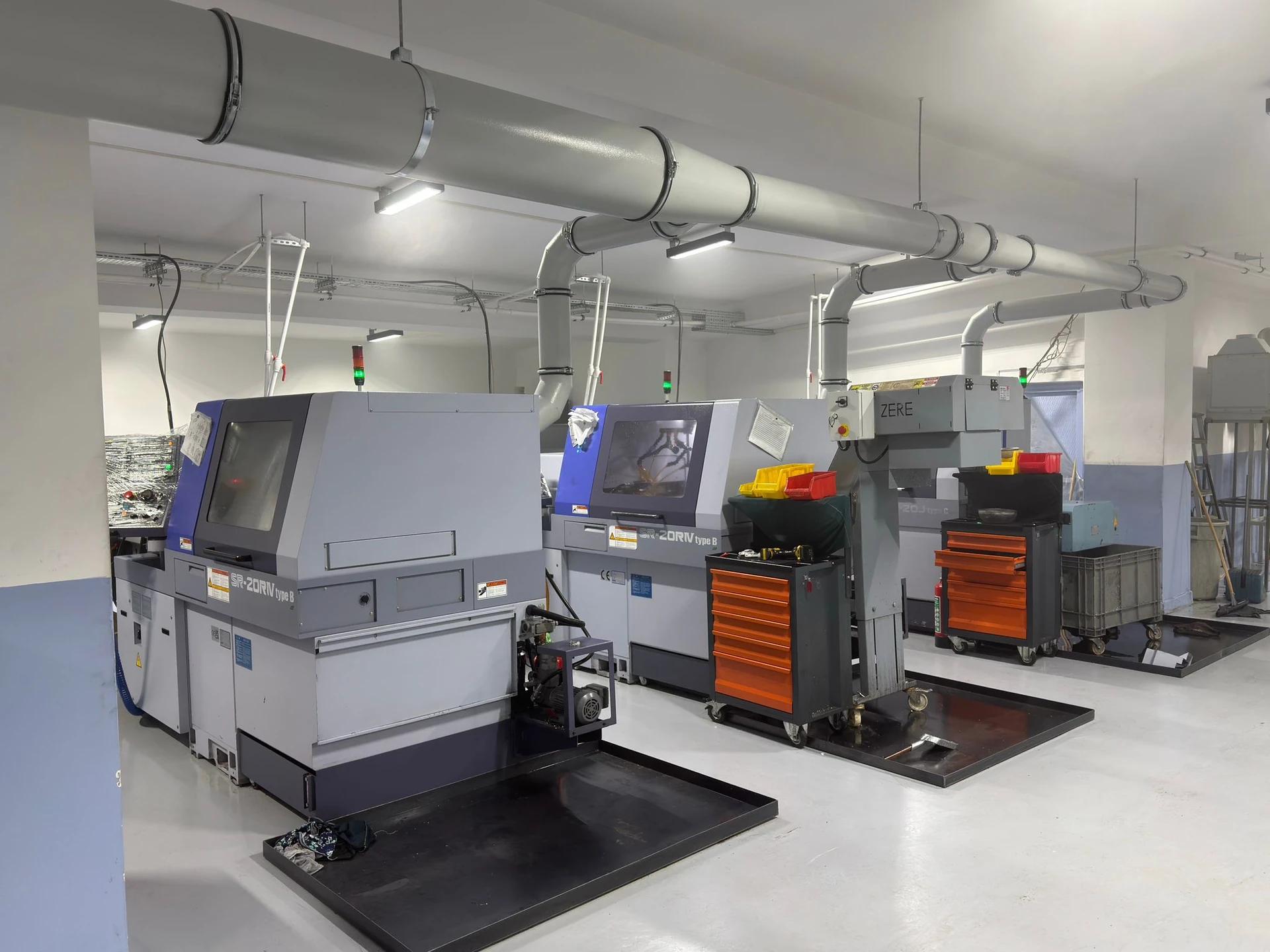
Controlling oil smoke in sliding-head lathes requires a combined review of the machining fluid, process conditions and enclosure extraction. Less visible smoke alone does not demonstrate adequate filtration or safe exposure.
Why Does Oil Smoke Form?
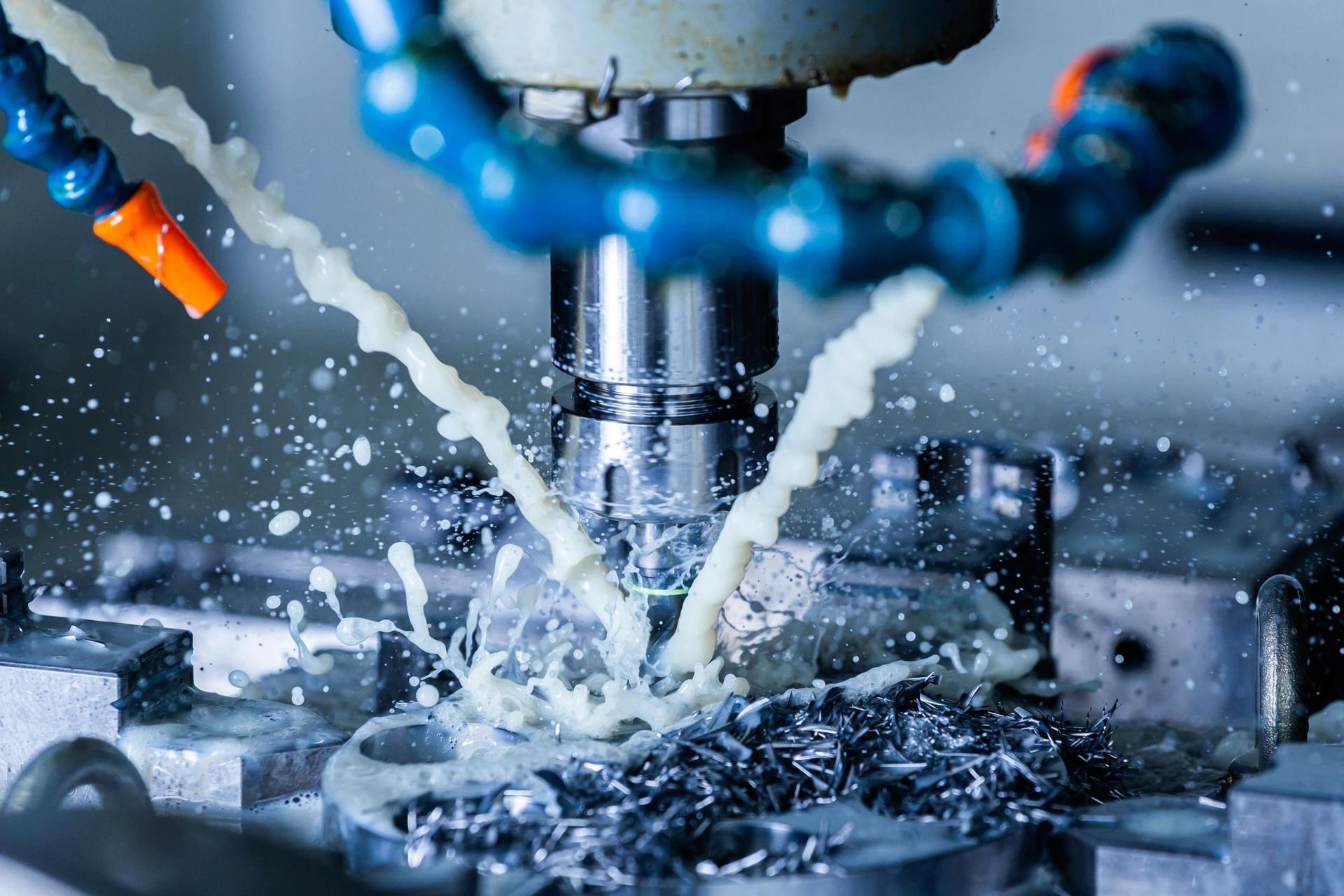
Sliding-head lathes deliver oil continuously to the cutting zone during long production runs. Mechanical breakup creates mist, while contact with hot surfaces can contribute finer aerosol and vapour. A machine using neat cutting oil may need a different filtration arrangement from one using an emulsion.
Record the fluid, spindle speed, high-pressure coolant settings, material and operating hours. Enclosure volume alone is insufficient for selection: openings, door cycles and the machine manufacturer's extraction requirement also matter.
Mist, Smoke And Vapour
Large droplets and fine aerosols impose different loads on a filter. Pre-separation, coalescing media and an optional final filter serve different purposes. HEPA captures particles; it does not remove gases or vapours. Persistent odour requires a separate assessment of the fluid, temperature and gaseous contaminants.
Compare oil smoke filtration with oil mist filtration before selecting equipment.
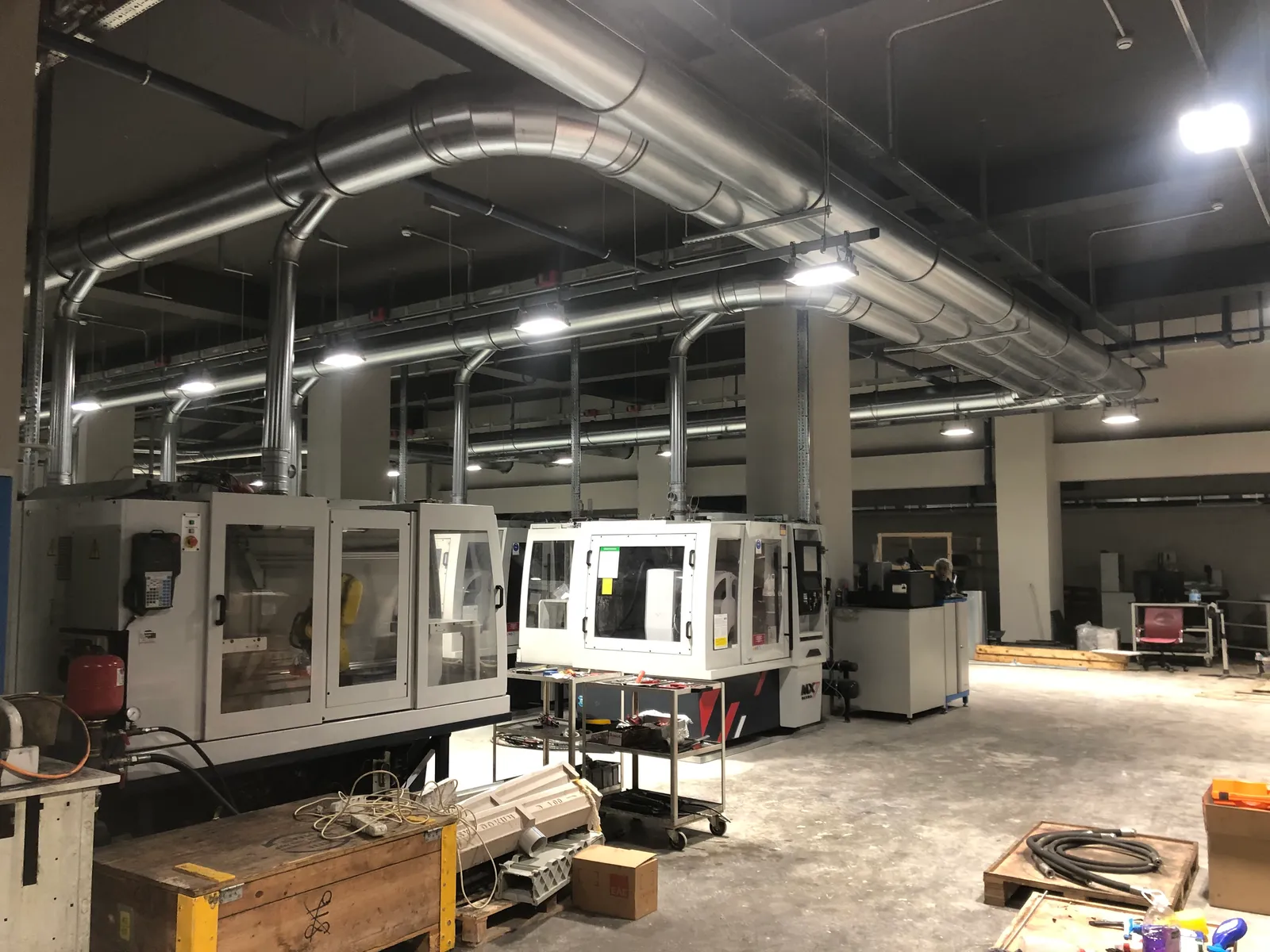
What Should Be Checked In The Extraction Line?
- Position the inlet to capture contaminated air without directly drawing in chips and bulk liquid.
- Size ducts for the required airflow and losses through bends and the full route.
- Keep separated-oil drainage clear; assess fluid quality before returning it to production.
- Monitor filter loading, fan condition and capture performance together.
Smoke escaping at a door is not proof that the filter is full. Leaking ducts, a closed damper, blocked drainage or insufficient airflow may be responsible. Increasing fan speed without measurements can increase liquid carryover and energy use.
Individual Units Or A Central System?
Independent units can suit dispersed machines and allow separate maintenance. A central system may suit several machines operating together. The decision depends on simultaneous airflow, duct routes, redundancy and service access rather than a fixed machine count.
For neat-oil machining, assess fire risks across the machine protection system and extraction installation. Adding a machine to an existing duct requires a new check of fan and filter capacity.
Maintenance Signals To Record
Record differential pressure with a new filter and during stable operation. Compare changes under similar production conditions with airflow, drainage and outlet observations. A sudden pressure drop can indicate a seal leak, but may also follow a fan or damper change; it does not automatically prove torn media.
Use the oil mist filter replacement guide and oil smoke replacement filters to plan maintenance and identify the correct stage.