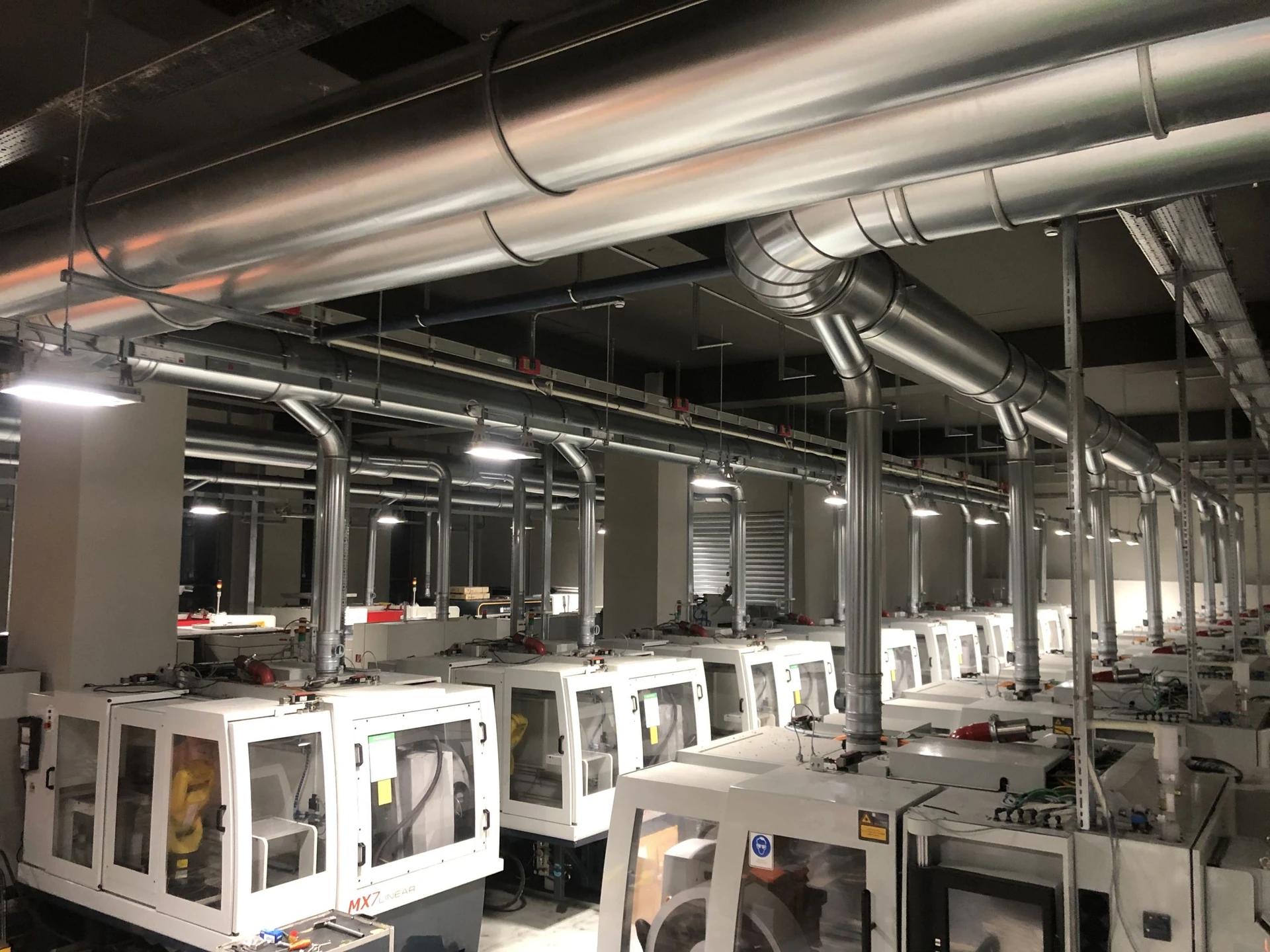
Even without visible mist in the workshop, oily surfaces, frequent maintenance and workers’ observations can be signs that extraction needs checking.
These six signs do not prove an oil mist problem or replace measurements. If several occur together, review the work, cleaning routines and extraction system.
- 01Oily floors
- 02Frequent equipment maintenance
- 03Worker observations
- 04Surface deposits
- 05Rising operating costs
- 06Missing measurement records
1. An Oily Film On Floors
Floors becoming slippery again soon after cleaning need attention. The source could be a fluid leak, carried-over chips, a spill or settled aerosol. Record where deposits appear and which operation precedes them; check machine leaks and extraction performance separately.
2. Recurring Electronics And Sensor Maintenance
Frequently contaminated control-cabinet filters, oily optical surfaces or increasing cleaning needs may suggest that ambient air is carrying contamination into equipment. However, not every electrical fault is caused by oil mist. Review cabinet cooling, seals and the manufacturer’s maintenance instructions together.
Read more in our article on protecting CNC electronics.
3. Health Concerns Reported By Workers
Coughing, eye discomfort or skin symptoms cannot be attributed to one contaminant on their own. Symptoms that appear or worsen at work should nevertheless be reported to the occupational health team. HSE’s employee guidance recommends assessment of skin and respiratory symptoms that may relate to metalworking fluids.
4. Deposits On Walls, Lights And Cable Trays
A sticky layer on high or distant surfaces may indicate that contamination is travelling beyond its source. Record cleaning dates and deposit locations, then investigate their relationship to enclosure leaks, open doors and air movement.
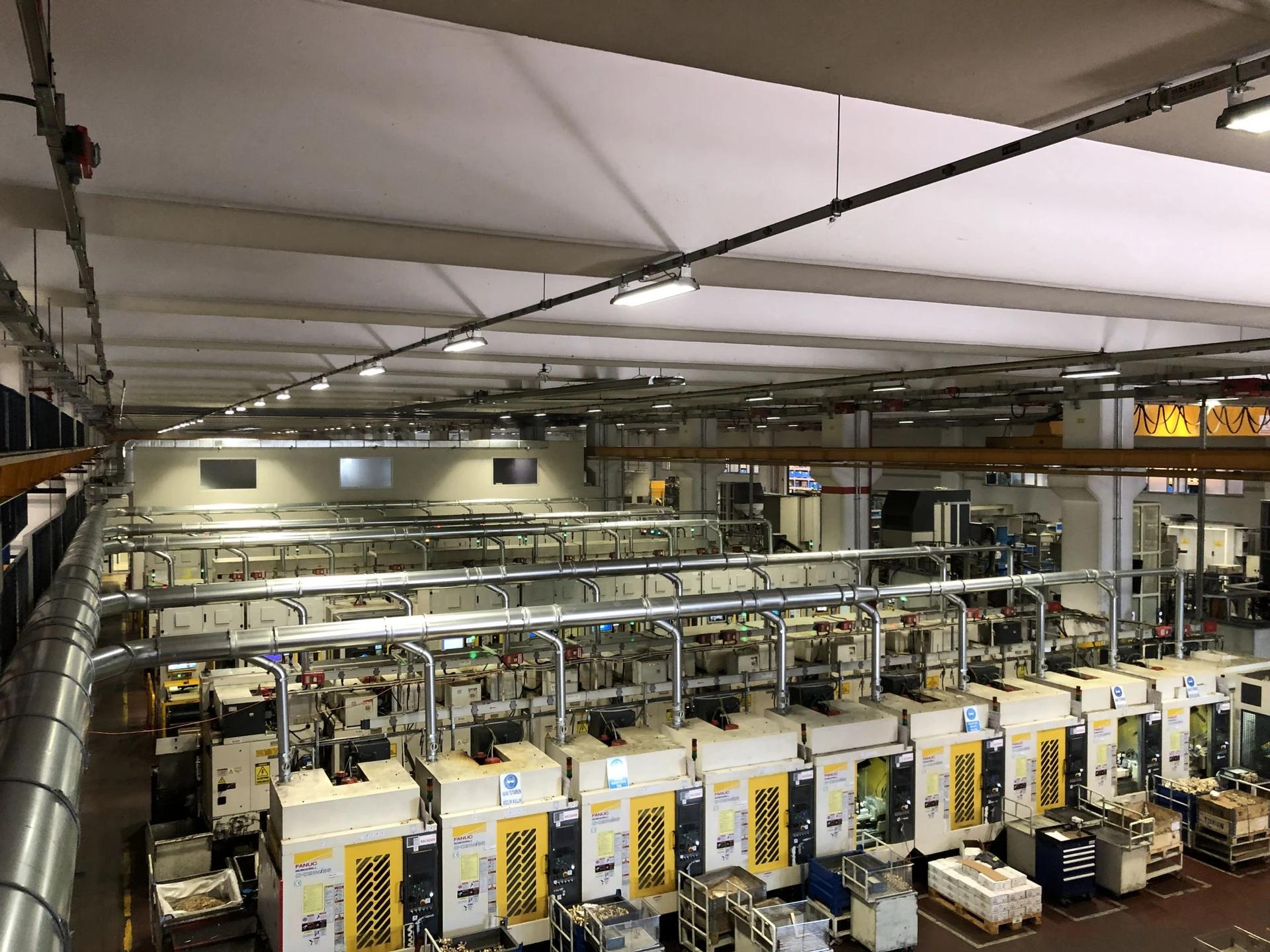
5. Rising Ventilation And Maintenance Costs
Frequently loaded filters, longer fan operating hours or greater demand for general ventilation may appear in operating records. Production levels, seasonal changes or another maintenance issue may also explain them. Compare equivalent operating conditions before attributing energy losses to oil mist or estimating savings.
6. Missing Measurement And Maintenance Records
An assessment is incomplete if the conditions of the last measurement, the basis for filter replacement or the system’s design airflow are unknown. This does not establish that an exposure limit has been exceeded; it shows that the supporting information needs to be completed.
See our exposure limits guide for measurement methods and interpretation.
Where Can You Start?
- Record the date, machine and task for each observation.
- Gather details of the fluid, filter model and last maintenance visit.
- Have leaks, drainage and extraction indicators checked according to the manufacturer’s instructions.
- Agree the scope of measurements or a site assessment with the safety and maintenance teams.
BMT Teknik reviews existing extraction and filter selection against the work being done. Our article on industrial solutions for oil mist explains the approach in more detail.