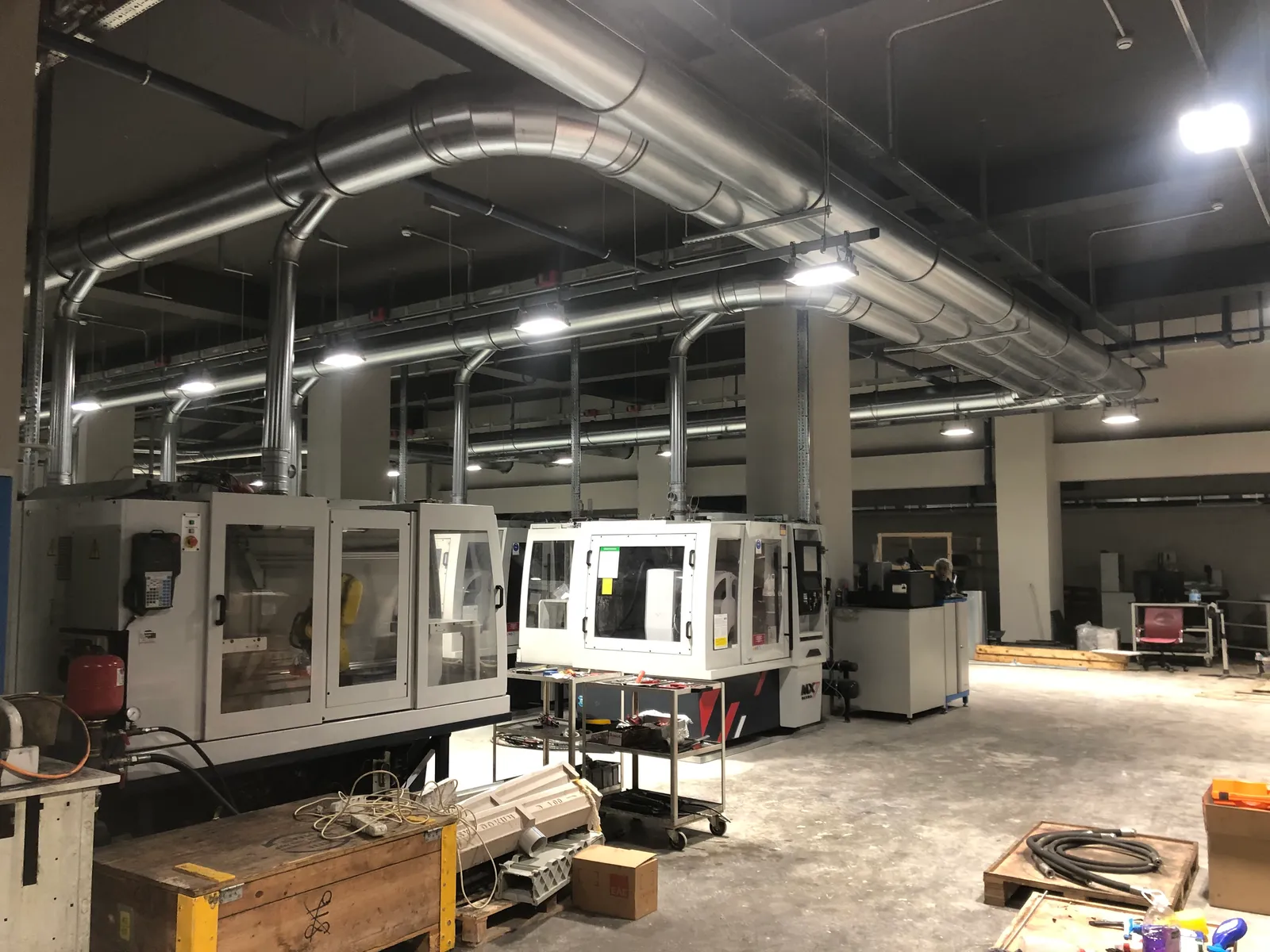
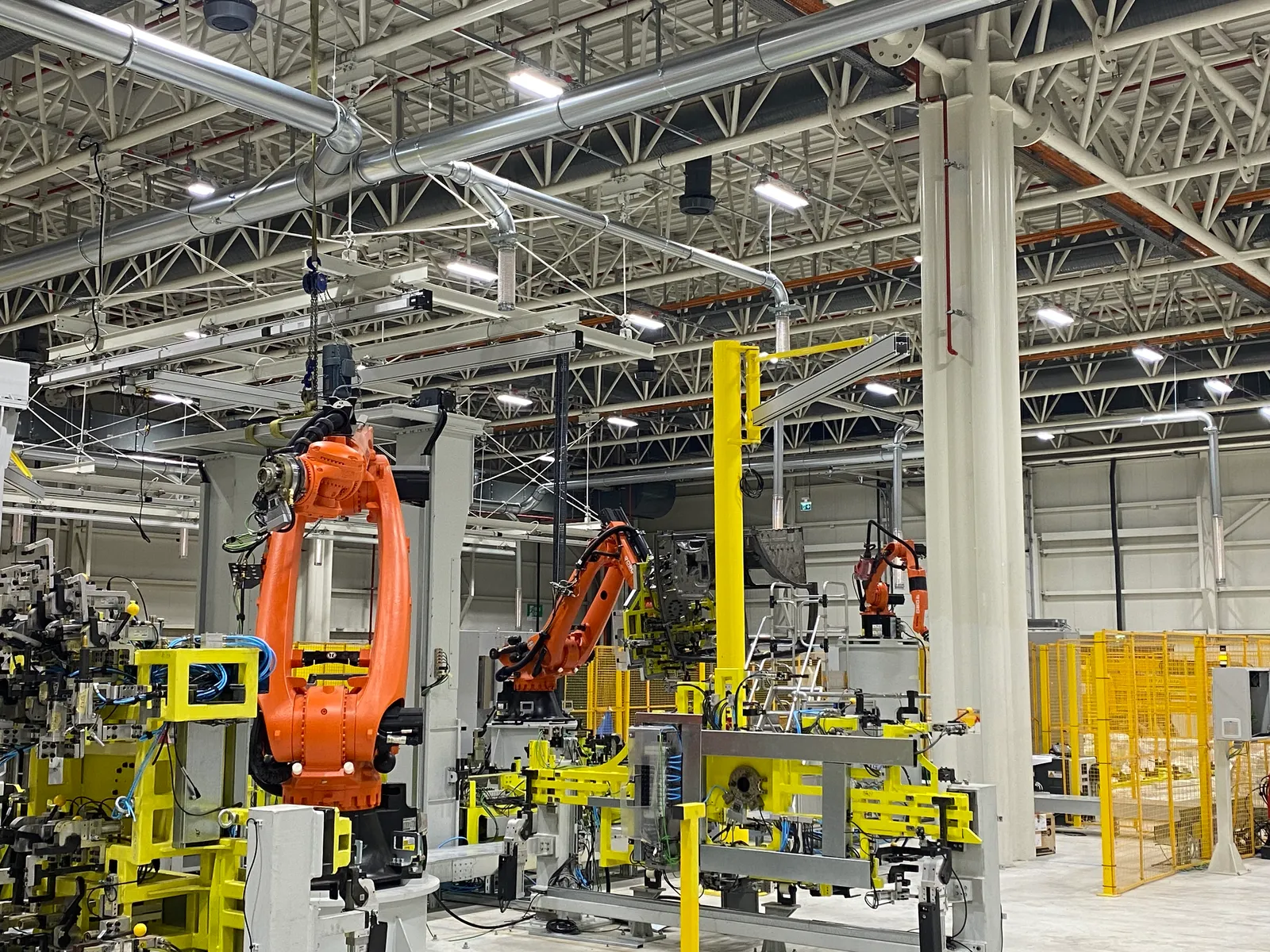
Vacuum chip conveying moves metal chips through enclosed pipework using an air stream. Suitability depends on chip shape, throughput, liquid content and pipe routing.
How Does The System Work?
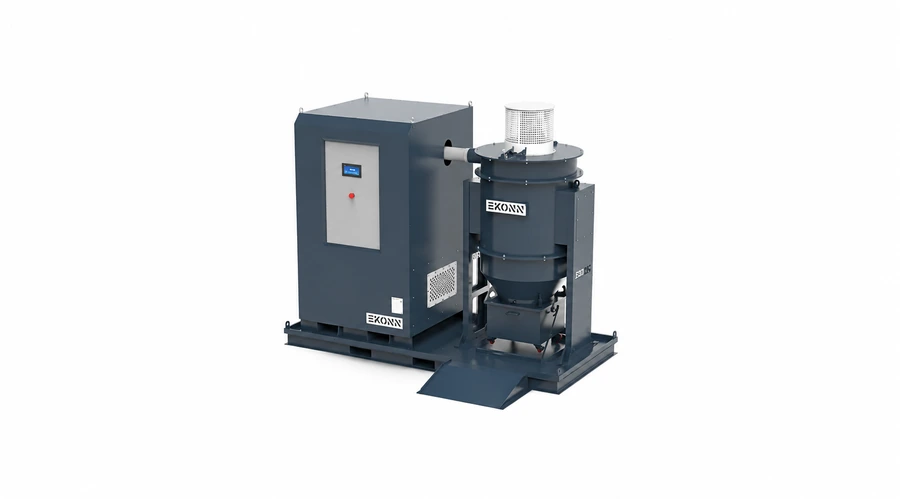
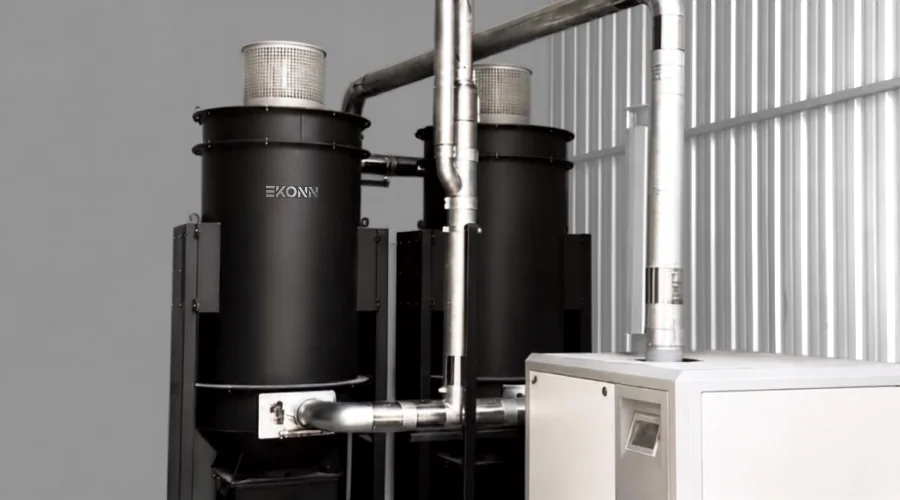
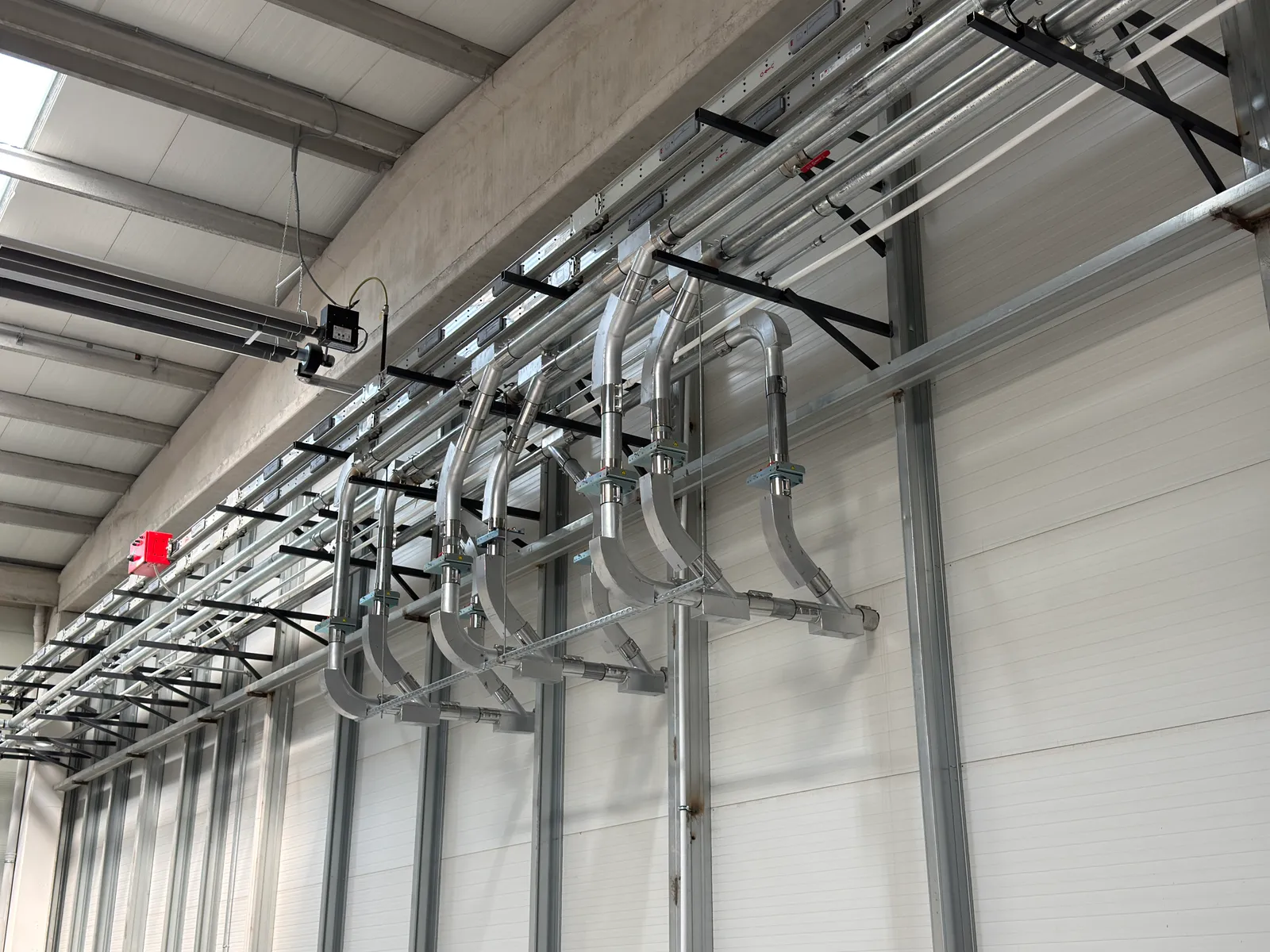
Chips collected beneath a machine conveyor enter the pipe in a controlled manner. The vacuum unit generates the conveying airflow; a separator removes chips from the air and transfers them to a suitable container or silo. A protection filter captures residual material before the conveying unit. Multiple collection points operate in a sequence matched to capacity.
This article concerns metal chips. Wood dust and wood-chip extraction requires a different material and safety assessment.
Three Conveying Methods
| Method | Advantage | Considerations |
|---|---|---|
| Bins and forklift | Simple for small quantities | Labour, spillage and vehicle traffic |
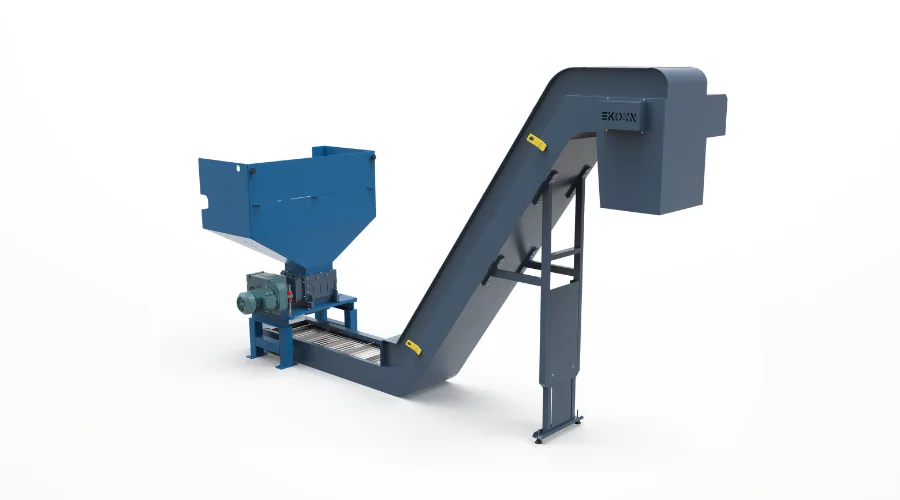
| Mechanical conveyor | Regular transfer along a process | Floor space, route and maintenance |
| Vacuum line | Enclosed central collection | Chip shape, liquid content and line losses |
Methods can be combined. A machine conveyor may discharge into a hopper followed by vacuum transfer. Chip processing systems also include crushing and liquid-separation options.
When Is Pre-Treatment Needed?
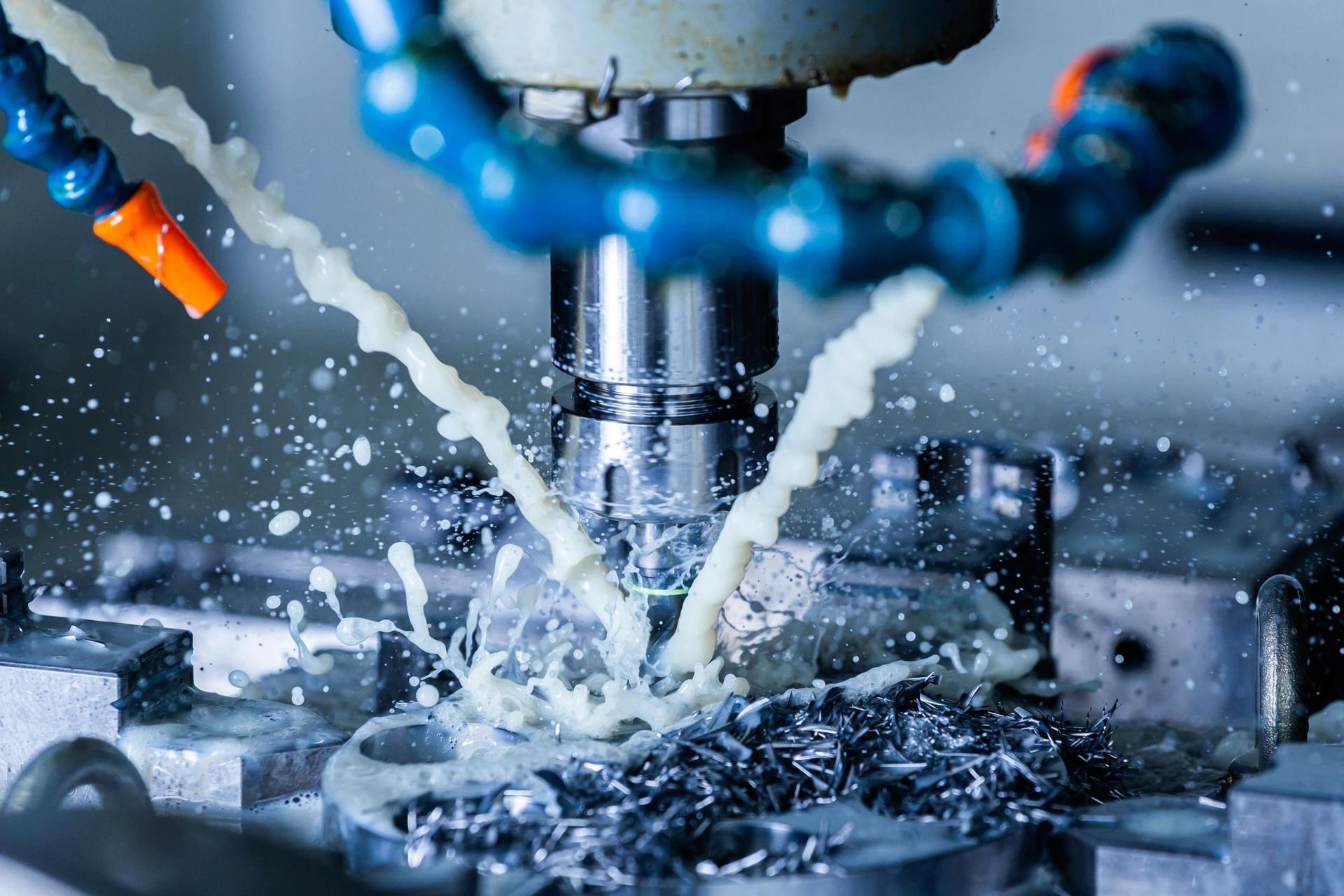
Long, tangled chips can make dosing difficult and may require crushing. Liquid content influences agglomeration and separation needs. It is not correct to prescribe a centrifuge before every wet-chip application: confirm the manufacturer's acceptable material conditions.
Temperature, abrasion and mixing of alloys also matter. Pipe diameter or motor power alone does not establish conveying capacity. Distance, elevation, bends and chip density must be considered together.
Two Illustrative Scenarios
An aluminium workshop with many machines: Frequent bin movements, limited floor space and high throughput may justify central collection. A sample conveying trial, liquid content and separate alloy routes inform the decision.
A small steel-machining workshop: Reducing the volume of long wet chips and recovering fluid may be the first investment. With low daily volumes, improving existing conveyors and bin handling may be more appropriate.
These are illustrative decision scenarios, not completed customer projects. Investment payback should account for operator time, collection frequency, maintenance and energy.
What Should Be Prepared For A Site Survey?
Share the metal, chip photographs, daily quantity, liquid content, conveyor discharge height and layout. Container position and intended line length are important. Metalworking solutions help coordinate extraction and chip management.